01 / Marylebone · W1

Cavendish Square
History behind the address.

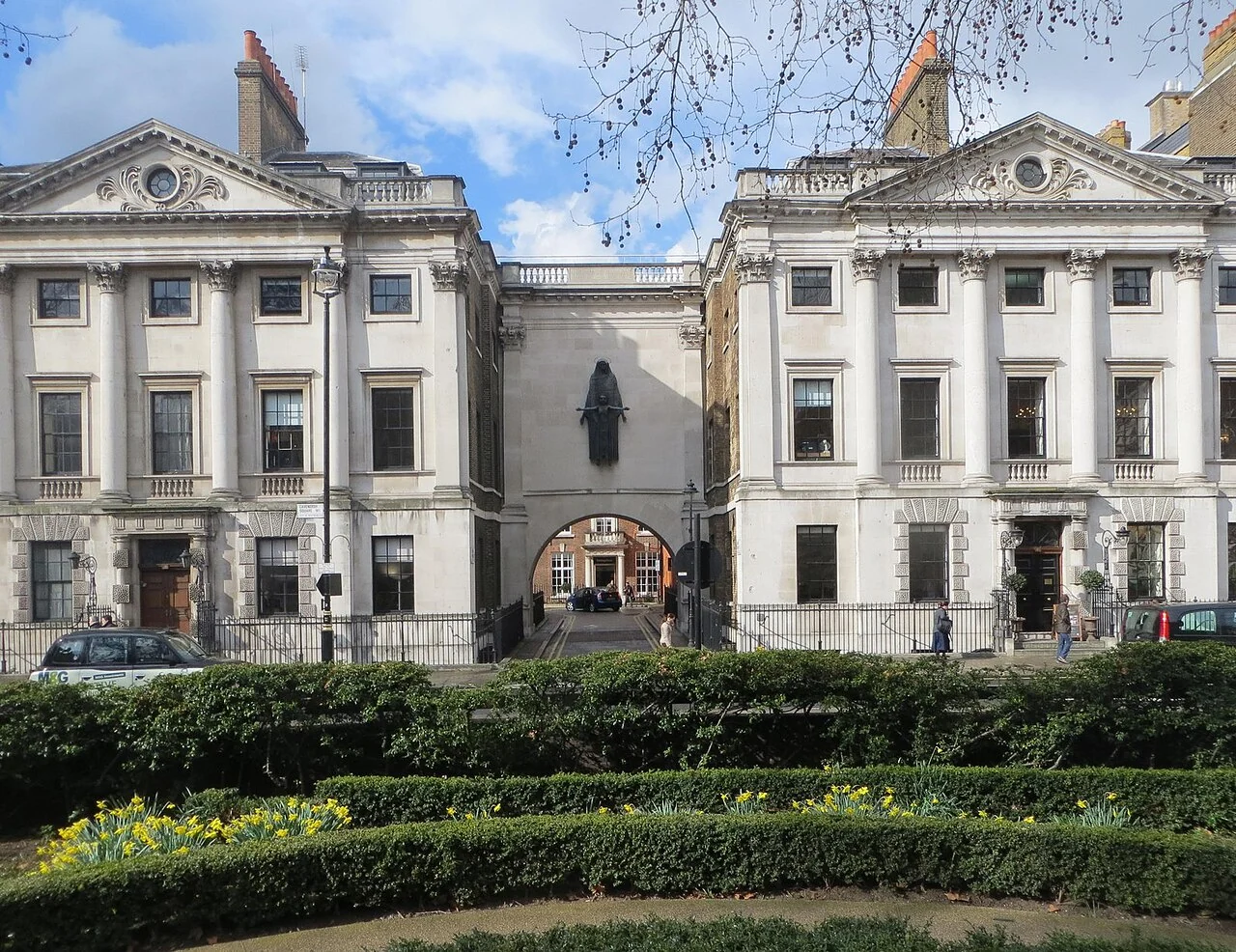
Cavendish Square was laid out from 1717 as the centrepiece of an ambitious scheme for the estate of the Earl of Oxford. The plan associated with John Prince envisaged grand houses around a formal open space. The financial disruption of the South Sea Bubble helped slow the early building programme.

Construction and alteration continued over subsequent generations. The square became a prominent address within Marylebone and later acquired strong medical and institutional connections. Its mixture of surviving houses and replacement buildings reflects that long transition from a residential estate to a varied central London neighbourhood.

History sources
Explore its people and history
Cavendish Square, London.
Cavendish Square, London. 11-13 Cavendish Square by Chris Denny · Wikimedia Commons · CC BY-SA 2.0 · Resized and converted to WebP for display.

This history is growing. Further directory research and photographs will be added.

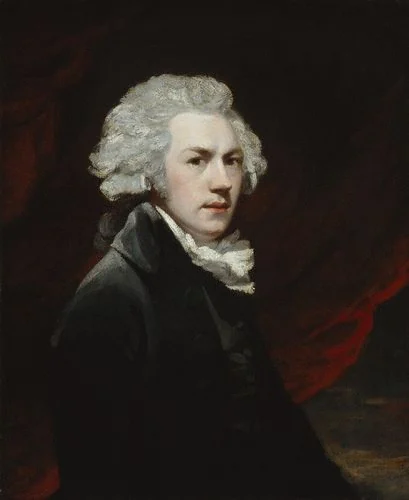
Sir Martin Archer Shee.
Sir Martin Archer Shee. Martin Archer Shee (self-portrait) · Wikimedia Commons · Public domain · Resized and converted to WebP for display.

02 / People behind the doors

Cavendish Square’s
people and stories.

A few lives that connect this neighbourhood with a much wider story.

Sir Martin Archer Shee

Historical No. 32 Cavendish Square

Boyle’s and Webster’s record Shee at historical No. 32. Born in Dublin, he made his career as a portrait painter and also wrote poetry and prose. In 1830 he succeeded Sir Thomas Lawrence as president of the Royal Academy, holding the office for twenty years.

Sources and directory references

Selected directory observations: Boyle’s 1831, PDF p. 50 (1831_BG); Boyle’s 1832, PDF p. 52 (1832_BG); Webster’s 1848, PDF p. 57 (1848_WB); Webster’s 1849, PDF p. 57 (1849_WB). Page references are PDF pages. These observations do not establish continuous residence.

Lady Charlotte Schreiber

No. 17 Cavendish Square · listed in 1890 and 1893

Better known in literary history as Lady Charlotte Guest, Schreiber translated the medieval Welsh tales of the Mabinogion into English. She also managed the Dowlais ironworks after her first husband’s death. Her later life brought extensive collecting of ceramics, fans and playing cards. Webster’s names her in her own right at No. 17.

Sources and directory references

Selected directory observations: Webster’s 1890, printed page 48 (PDF page 123), column 2: 17 SCHREIBER, Lady Charlotte; Webster’s 1893, printed page 48 (PDF page 119), column 3: 17 SCHREIBER, Lady Charlotte. Page references are PDF pages. These observations do not establish continuous residence.

Emily Charlotte Talbot

No. 3 Cavendish Square

Talbot inherited the Margam and Penrice estates in 1890 and became an influential industrial landowner and philanthropist in south Wales. Her wealth supported churches and community institutions around Port Talbot.

Sources and directory references

Selected directory observations: Webster’s 1891, printed page 48 (PDF page 119), column 2: 3 TALBOT, Miss E.; Webster’s 1893, printed page 48 (PDF page 119), column 2: 3 TALBOT, Miss E.; Royal Blue Book 1907, printed page 200 (PDF page 239), column 3: 3 Talbot, Miss. Page references are PDF pages. These observations do not establish continuous residence.

Lord George Bentinck

Harcourt House, historical No. 19 Cavendish Square · listed with the Duke of Portland’s household in 1829 and 1833

Bentinck combined a passion for horse racing with a parliamentary career as MP for King’s Lynn. In the 1840s he became a leading opponent of Robert Peel’s repeal of the Corn Laws, helping to split the Conservative Party. The early Boyle’s entries explicitly name him within the Portland family household at Harcourt House.

Sources and directory references

Selected directory observations: Boyle’s 1829, PDF page 44, column 1: 19 Duke of Portland Marquis of Titch- field Lord George Ben- tinek Lord Henry Ben- tinck; Boyle’s 1833, PDF page 55, column 1: 19 Duke of Portland MarquisofTitchfield Lord Geo .Bentinck Lord Henry Ben- tinck. Page references are PDF pages. These observations do not establish continuous residence.

Quintin Hogg

No. 5 Cavendish Square · listed in 1883 and 1887

Hogg devoted much of his wealth and energy to education for young Londoners. His work began with a ragged school and mission in 1864 and developed into the Regent Street Polytechnic, combining practical instruction with recreation. That institution became a predecessor of the University of Westminster. The directories place him close to its Regent Street home.

Sources and directory references

Selected directory observations: Webster’s 1883, printed page 48 (PDF page 125), column 1: 5 HOGG, Quintin; Webster’s 1887, printed page 48 (PDF page 123), column 1: 5 HOGG, Quintin. Page references are PDF pages. These observations do not establish continuous residence.

04 / Keep exploring

More history.
Freely discovered.

These collections are a good place to follow your curiosity. Browse their online records free; copies, downloads or permission to reproduce images may carry a charge.

Streets.London is a project by Infrastructure.London.
More ways we care for London’s homes and gardens.

Your details, thoughtfully handled.

Who we are. Streets.London is a project of London Infrastructure Solutions.

Launch updates. With your consent, we use your email address, optional street and postcode interests, the page where you signed up, and any organisation and property-count details you provide to handle group enquiries and send Streets.London launch and record-availability updates. These details are submitted to Brevo to manage our subscriber list. The optional email-update form does not create an account or purchase anything. Free account registration is separate; see our account privacy notice.

Keeping and removing your details. We keep signup information while it is needed for these updates. You can withdraw consent, ask for a copy or correction, or request deletion using the unsubscribe link in our emails, by replying to an update from us or using the London Infrastructure Solutions contact form. We will stop updates when you withdraw consent.

Services we use. Our hosting provider serves this website. Brevo processes signup details and manages our email updates, while Cloudflare Turnstile checks for automated abuse. These providers may process information outside the UK. We do not sell your signup information.

Analytics. If you allow optional analytics, Google Analytics helps us understand page visits and completed signups. We do not send your form email address, street interest or postcode to Google Analytics. Your cookie choice is stored on this device and can be changed using “Cookie choices”.

Your rights. You may ask us to access, correct or delete your information or withdraw consent. You can also raise a concern with the UK Information Commissioner’s Office at ico.org.uk.

Last updated: 15 November 2026.