

Sir Gerald du Maurier
No. 24 Cumberland Terrace · 1907–1916
The actor-manager lived at No. 24 with his family. The historical garden inventory records these years here, connecting the terrace with the London theatre world.
01 / Regent’s Park · NW1
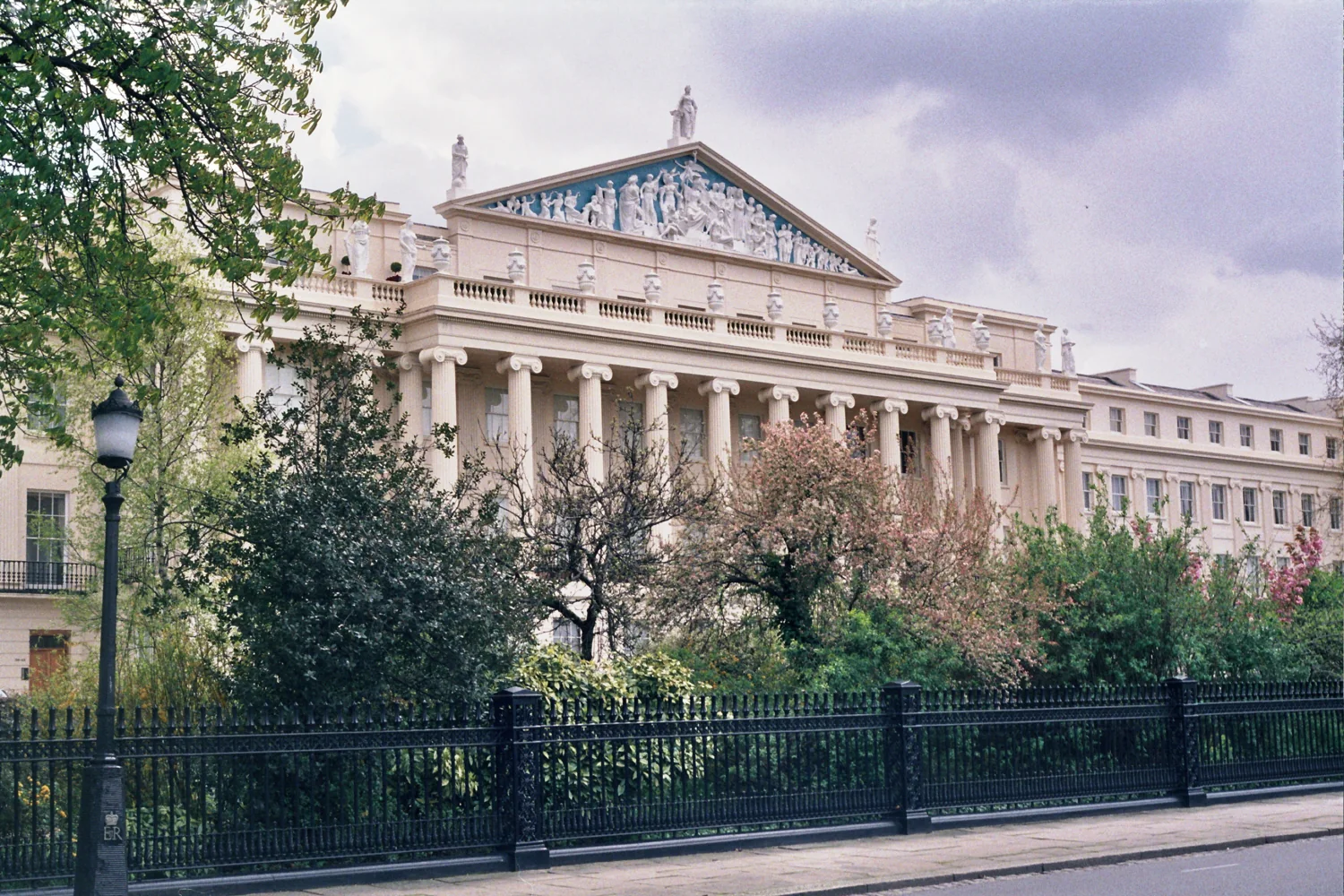
Cumberland Terrace was designed to look less like a row of houses than a palace facing Regent’s Park. John Nash and James Thomson created its grand classical composition as part of the Crown Estate development supported by the Prince Regent. The name honours George III’s son Ernest, Duke of Cumberland and later King of Hanover.
Two long garden enclosures provide a shared foreground to the architecture. Behind the ceremonial façade were individual households, with domestic lives quite different from the impression of a single monumental building. This contrast between a unified exterior and many separate addresses is one of the most revealing features of the Regent’s Park terraces.
02 / People behind the doors
A few lives that connect this neighbourhood with a much wider story.
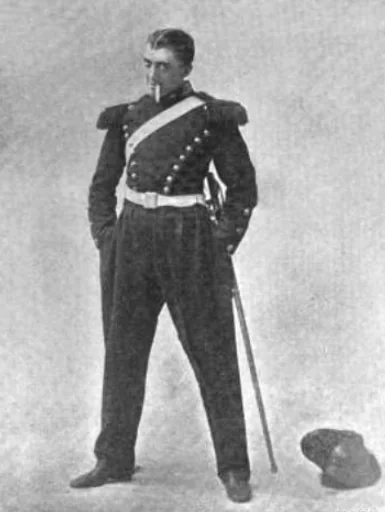
No. 24 Cumberland Terrace · 1907–1916
The actor-manager lived at No. 24 with his family. The historical garden inventory records these years here, connecting the terrace with the London theatre world.
No. 24 Cumberland Terrace · born here in 1907
The future novelist was born in the family home on the terrace. Her connection belongs to the address’s early-twentieth-century domestic story, long before the books that made her internationally known.
No. 4 Cumberland Terrace · recorded in 1910
The actress lived at No. 4. Her presence, alongside other theatrical households, shows how the terrace’s history extends beyond its aristocratic appearance.
No. 17 Cumberland Terrace · a stay around 1859
The novelist stayed at No. 17 around 1859. This is a documented visit rather than a claim that the terrace was her permanent home.
No. 2 Cumberland Terrace · listed in 1868
Boyle’s 1868 lists the physician Neil Arnott at No. 2, using the spelling ‘Neill’. Arnott combined medical practice with practical invention: his waterbed was intended to ease pressure on bedridden patients, while his work on stoves and ventilation tackled the quality of indoor air. Appointed physician extraordinary to Queen Victoria, he devoted much of his later life to scientific and sanitary improvements.
Selected directory observations: Boyle’s 1868, printed page 75 (PDF page 108), column 2: 2 Neill Arnott, M.D., F.R.S... Page references are PDF pages. These observations do not establish continuous residence.
No. 23 Cumberland Terrace · listed in 1874
Boyle’s April 1874 guide explicitly names Miss Anna Swanwick at No. 23, beneath another Miss Swanwick. Her translations introduced English readers to Goethe, Schiller and the tragedies of Aeschylus. She also supported women’s education. The full name in the guide provides a firm address for a scholar whose work linked Victorian literary culture with German and ancient Greek writing.
Selected directory observations: Boyle’s 1874, printed page 76 (number cropped in scan) (PDF page 111), column 1: 23 Miss Swanwick; Miss Anna Swanwick.. Page references are PDF pages. These observations do not establish continuous residence.
03 / Launching December 2026
Property record summaries from just £14.95 including VAT.
From December 2026, buy a summary of records showing who was listed at your property, with references to the historic directories and other sources behind each entry.
Our collection spans 1810–1939. For the oldest properties, coverage draws on over 100 data sources.1 Prices depend on how far back the available records extend. You’ll see the available dates and sources before buying.
We can also flag recorded street-name changes and renumbering up to 1951, helping you interpret historical addresses.2
Sign up for free and explore our 21 Bryanston Square example while more property records are being prepared.
Resident bodies, including estate teams, residents’ associations and garden committees, and other bulk purchasers ordering records for 10 or more properties at once qualify for a discount. Please contact us to find out more.
Resident group enquiryYour free account
Explore the example property’s records, compare the evidence and try the free tools.
Sign up for free and explore the dataAlready have an account?
Sign inJust Streets.London updates.
04 / Keep exploring
These collections are a good place to follow your curiosity. Browse their online records free; copies, downloads or permission to reproduce images may carry a charge.
Streets.London is a project by Infrastructure.London.
More ways we care for London’s homes and gardens.