01 / Marylebone · W1

Devonshire Place
History behind the address.

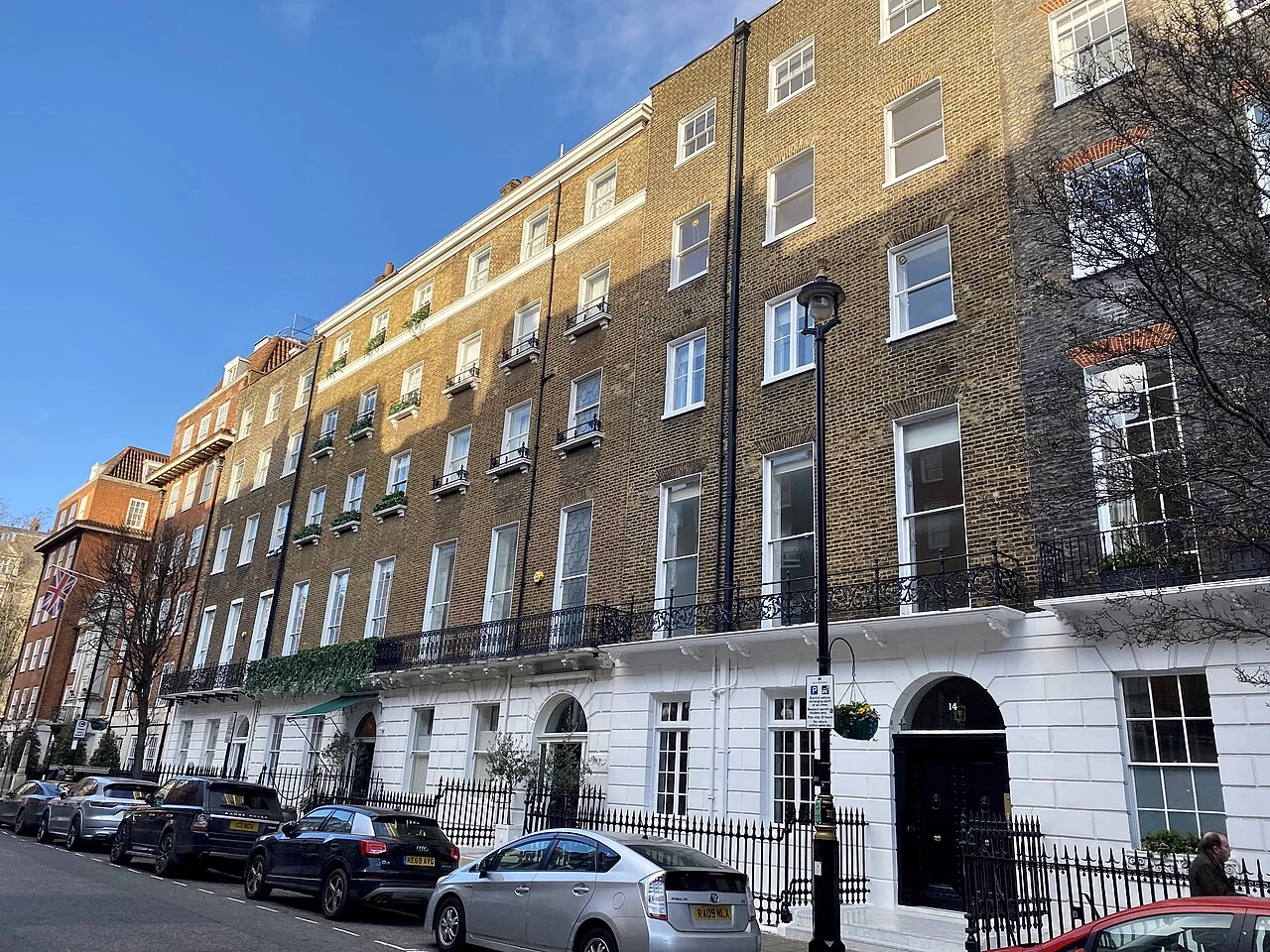
Devonshire Place developed in the late eighteenth century as building on the Portland estate advanced northwards. The road continued the line of Wimpole Street towards Marylebone Road, and its houses formed part of the estate’s later Georgian expansion.

Its residential frontages subsequently accommodated professional rooms, particularly as Marylebone became associated with medicine. That later reputation can obscure the wider range of nineteenth-century occupants. Directory entries reveal engineers and other professionals alongside the medical practitioners who helped shape the district’s identity.

History sources
Explore its people and history
Devonshire Place, London.
Devonshire Place, London. No Swan So Fine · Wikimedia Commons · CC BY-SA 4.0 · Resized and converted to WebP for display.

This history is growing. Further directory research and photographs will be added.

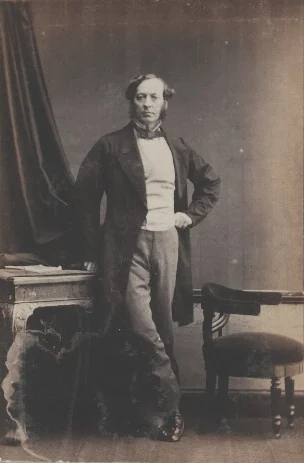
Henry Wollaston Blake.
Henry Wollaston Blake. Camille Silvy · Wikimedia Commons · Public domain · Resized and converted to WebP for display.

02 / People behind the doors

Devonshire Place’s
people and stories.

A few lives that connect this neighbourhood with a much wider story.

Henry Wollaston Blake

Historical No. 8 Devonshire Place

Boyle’s and Webster’s list H. Wollaston Blake at No. 8. An engineer associated with Boulton and Watt, he was involved in the engines for Brunel’s Great Eastern. Correspondence preserved in university archives connects his work with one of the most ambitious ships of the nineteenth century.

Sources and directory references

Selected directory observations: Boyle’s 1892, PDF p. 110 (1892_BG); Boyle’s 1894, PDF p. 109 (1894_BG); Webster’s 1863, PDF p. 109 (1863_WB); Webster’s 1870, PDF p. 111 (1870_WB). Page references are PDF pages. These observations do not establish continuous residence.

John Pyke Hullah

No. 11 Devonshire Place · listed in 1862–63

Hullah helped make group singing part of nineteenth-century education. His classes trained teachers to bring music into schools, while his lectures and textbooks reached a wider public. He taught vocal music at King’s College London and in 1872 became the first government inspector of music in teacher-training colleges. His Devonshire Place listings belong to the middle of this teaching career.

Sources and directory references

Selected directory observations: Webster’s 1862, printed page 640 (PDF page 119), column 4: 11 HULLAH, John; Webster’s 1863, printed page 64 (PDF page 109), column 4: 11 HULLAH, John. Page references are PDF pages. These observations do not establish continuous residence.

Louisa Garrett Anderson

No. 31 Devonshire Place · listed as physician and surgeon in Kelly’s, 1914–15

Anderson was a surgeon and suffrage campaigner who, with Flora Murray, established hospitals staffed by women during the First World War. Their Endell Street Military Hospital treated wounded servicemen in central London and demonstrated women’s ability to run a major military medical institution. Kelly’s supplies her full name and profession at No. 31 in two successive editions.

Sources and directory references

Selected directory observations: Kelly’s Post Office Directory 1914, PDF page 149, column 4: 31 Anderson Miss Louisa Garrett, .M.D., B.s. physician & surgn; Kelly’s Post Office Directory 1915, PDF page 150, column 4: 31 Anderson Mi~s Louisa Garrett, M.D., B.s. phy8ician & sur!!n. Page references are PDF pages. These observations do not establish continuous residence.

04 / Keep exploring

More history.
Freely discovered.

These collections are a good place to follow your curiosity. Browse their online records free; copies, downloads or permission to reproduce images may carry a charge.

Streets.London is a project by Infrastructure.London.
More ways we care for London’s homes and gardens.

Your details, thoughtfully handled.

Who we are. Streets.London is a project of London Infrastructure Solutions.

Launch updates. With your consent, we use your email address, optional street and postcode interests, the page where you signed up, and any organisation and property-count details you provide to handle group enquiries and send Streets.London launch and record-availability updates. These details are submitted to Brevo to manage our subscriber list. The optional email-update form does not create an account or purchase anything. Free account registration is separate; see our account privacy notice.

Keeping and removing your details. We keep signup information while it is needed for these updates. You can withdraw consent, ask for a copy or correction, or request deletion using the unsubscribe link in our emails, by replying to an update from us or using the London Infrastructure Solutions contact form. We will stop updates when you withdraw consent.

Services we use. Our hosting provider serves this website. Brevo processes signup details and manages our email updates, while Cloudflare Turnstile checks for automated abuse. These providers may process information outside the UK. We do not sell your signup information.

Analytics. If you allow optional analytics, Google Analytics helps us understand page visits and completed signups. We do not send your form email address, street interest or postcode to Google Analytics. Your cookie choice is stored on this device and can be changed using “Cookie choices”.

Your rights. You may ask us to access, correct or delete your information or withdraw consent. You can also raise a concern with the UK Information Commissioner’s Office at ico.org.uk.

Last updated: 15 November 2026.