01 / West Kensington · W14

Edith Road
History behind the address.

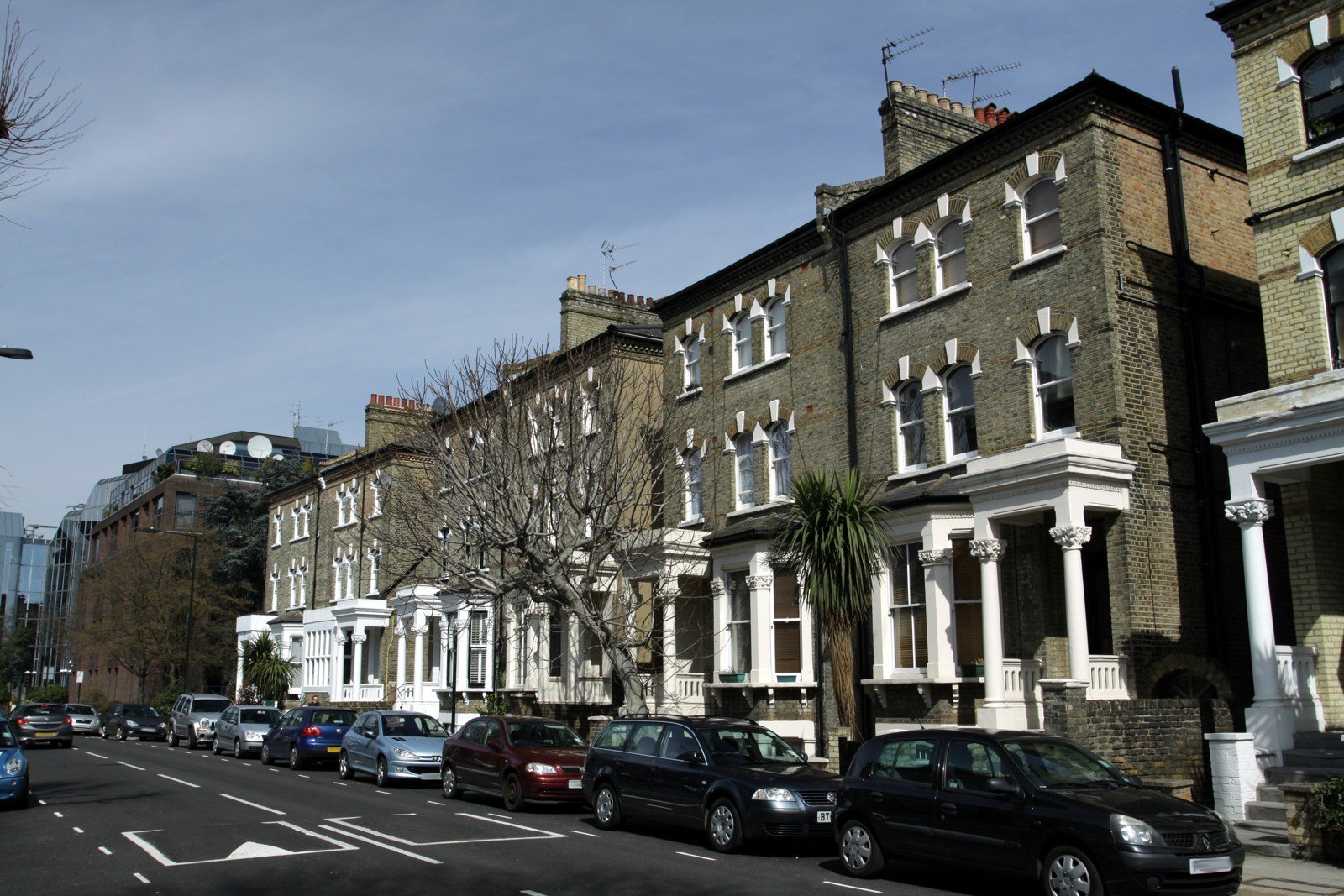
Edith Road belongs to the residential streets around Barons Court and West Kensington, where nineteenth-century building transformed an area previously occupied by fields, gardens and scattered houses. Its terraces form part of a larger suburban pattern shaped by estate development and improved railway connections. The street’s long rows of houses give it a quieter domestic character than the main roads and transport routes nearby.

Brick façades, pale window surrounds and projecting bays establish a repeated architectural rhythm, while small front gardens provide a narrow buffer between the houses and pavement. Differences in height, surface treatment and later alterations prevent the frontage from being entirely uniform. The street also bears traces of twentieth-century change: wartime destruction and subsequent rebuilding altered individual plots within the older pattern. Seen as a whole, it records both the ambitions of Victorian suburban housing and the piecemeal changes that followed.

History sources
Explore its people and history
Terraced houses in Edith Road, photographed in spring 2013 by Chmee2; Wikimedia Commons, CC BY-SA 3.0.
Terraced houses in Edith Road, photographed in spring 2013 by Chmee2; Wikimedia Commons, CC BY-SA 3.0. Chmee2 · Wikimedia Commons · CC BY-SA 3.0

This history is growing. Further directory research and photographs will be added.

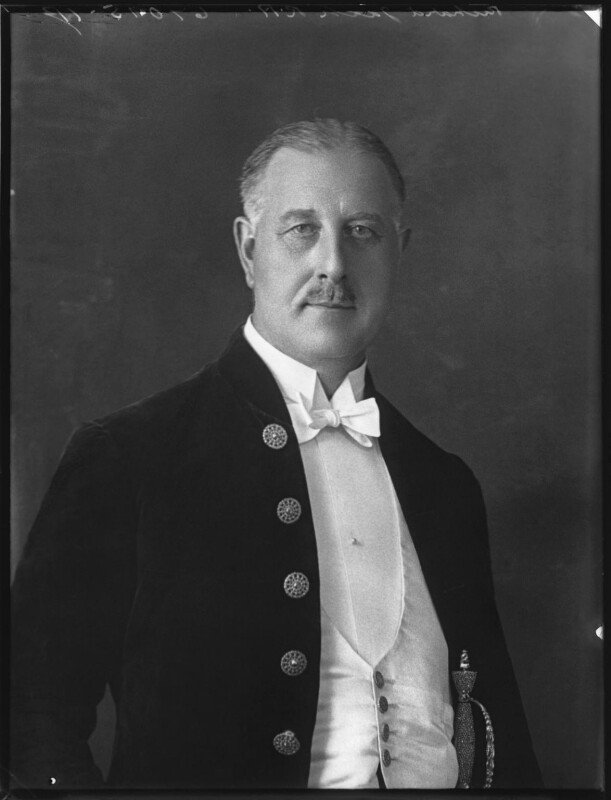
Painter Richard Jack, photographed by Bassano Ltd in 1926; Wikimedia Commons, public domain.
Painter Richard Jack, photographed by Bassano Ltd in 1926; Wikimedia Commons, public domain. Bassano Ltd · Wikimedia Commons · Public domain

02 / People behind the doors

Edith Road’s
people and stories.

A few lives that connect this neighbourhood with a much wider story.

Richard Jack

No. 24 Edith Road · listed in 1903 and 1907

Jack was a British-born painter who became Canada’s first official war artist in 1916. His large battle paintings helped establish the visual record of Canadian service in the First World War. He also painted portraits and landscapes, and was elected a Royal Academician in 1920. The Edith Road entries belong to his London career before his wartime commission.

Sources and directory references

Selected directory observations: Boyle’s 1903, PDF page 127, column 1: 24 Richard Jack; Royal Blue Book 1907, printed page 256 (PDF page 295), column 3: 24 Jack, Richard. Page references are PDF pages. These observations do not establish continuous residence.

Charles James Feret

No. 49 Edith Road · listed in 1900

Feret was a journalist and local historian who edited the Fulham Chronicle. His three-volume Fulham Old and New, published in 1900, assembled a detailed history of the parish, its buildings and its inhabitants. The same year’s directory places him at No. 49 Edith Road. His work remains a useful record of a district that was changing rapidly as former market gardens and estates became suburban streets.

Sources and directory references

Selected directory observations: Boyle’s 1900, PDF page 125, column 2: 49 Charles James Feret. Page references are PDF pages. These observations do not establish continuous residence.

Wilhelm Meyer Lutz

No. 115 Edith Road · listed as W. Meyer Lutz in 1900 and 1903

Usually known as Meyer Lutz, this German-born composer and conductor helped shape the musical entertainment of Victorian London. He became musical director of the Gaiety Theatre in 1869 and wrote music for its popular burlesques. His long theatrical career also encompassed operas, songs and church music. The two directory entries come at the end of his life; he died in January 1903.

Sources and directory references

Selected directory observations: Boyle’s 1900, PDF page 125, column 2: 115 W. Meyer Lutz; Boyle’s 1903, PDF page 127, column 1: 115 W. Meyer Lutz. Page references are PDF pages. These observations do not establish continuous residence.

04 / Keep exploring

More history.
Freely discovered.

These collections are a good place to follow your curiosity. Browse their online records free; copies, downloads or permission to reproduce images may carry a charge.

Streets.London is a project by Infrastructure.London.
More ways we care for London’s homes and gardens.

Your details, thoughtfully handled.

Who we are. Streets.London is a project of London Infrastructure Solutions.

Launch updates. With your consent, we use your email address, optional street and postcode interests, the page where you signed up, and any organisation and property-count details you provide to handle group enquiries and send Streets.London launch and record-availability updates. These details are submitted to Brevo to manage our subscriber list. The optional email-update form does not create an account or purchase anything. Free account registration is separate; see our account privacy notice.

Keeping and removing your details. We keep signup information while it is needed for these updates. You can withdraw consent, ask for a copy or correction, or request deletion using the unsubscribe link in our emails, by replying to an update from us or using the London Infrastructure Solutions contact form. We will stop updates when you withdraw consent.

Services we use. Our hosting provider serves this website. Brevo processes signup details and manages our email updates, while Cloudflare Turnstile checks for automated abuse. These providers may process information outside the UK. We do not sell your signup information.

Analytics. If you allow optional analytics, Google Analytics helps us understand page visits and completed signups. We do not send your form email address, street interest or postcode to Google Analytics. Your cookie choice is stored on this device and can be changed using “Cookie choices”.

Your rights. You may ask us to access, correct or delete your information or withdraw consent. You can also raise a concern with the UK Information Commissioner’s Office at ico.org.uk.

Last updated: 15 November 2026.