01 / Notting Hill · W11

Ladbroke Gardens
History behind the address.

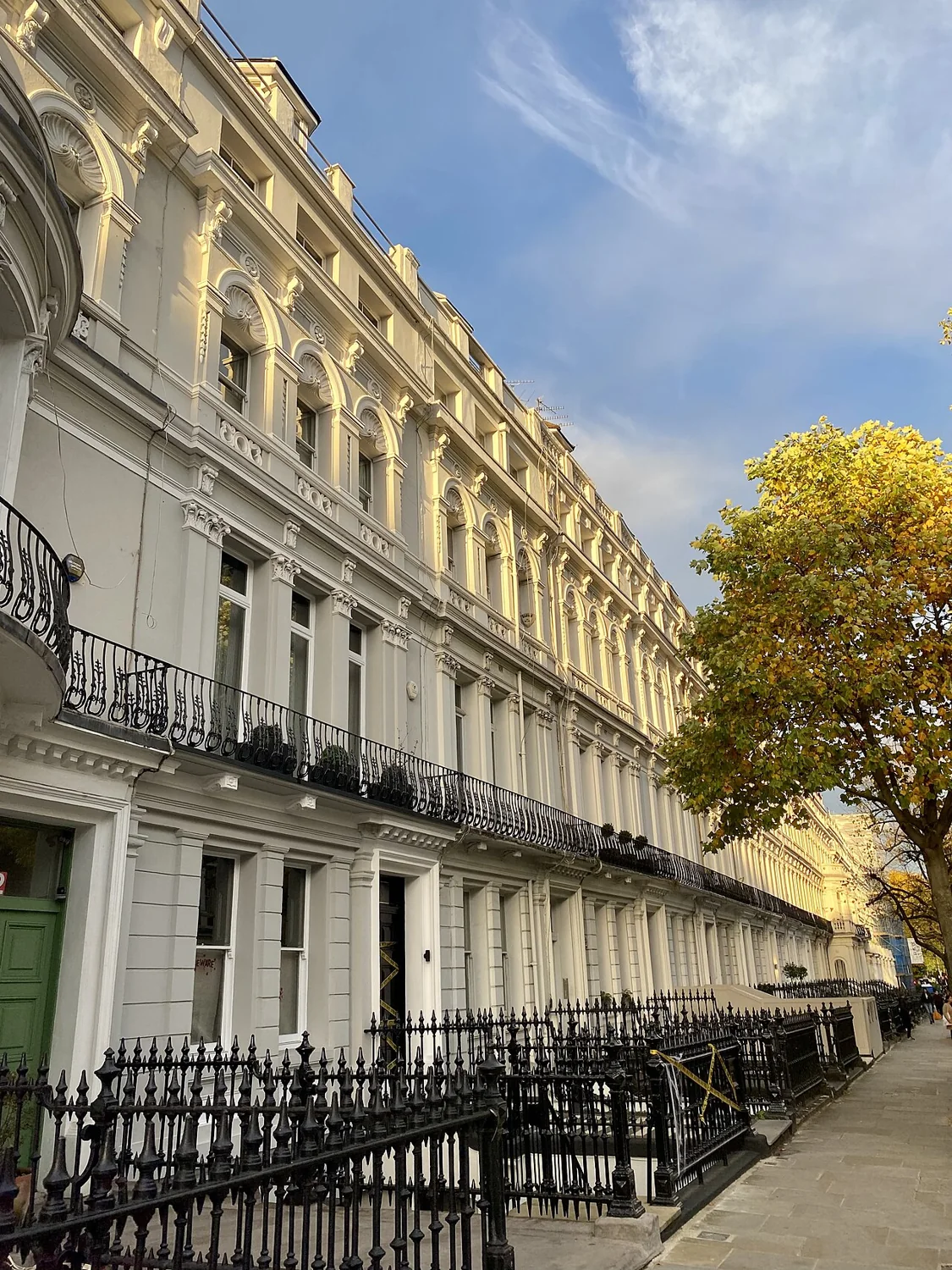
Ladbroke Gardens was developed during the 1850s and 1860s, with unusually tall terraces rising above the estate’s sloping ground. Thomas Allom’s architectural designs helped give the neighbourhood its grand Victorian character.

The two sides back onto different communal gardens. To the north lies the Arundel and Ladbroke enclosure, with mature trees and a woodland character; the southern side connects with Stanley Gardens North. Building was not straightforward, and financial interruptions left some houses unfinished for years. Records of the earliest occupants reveal the people who worked on the development as well as those who later rented its completed houses.

History sources
Explore its people and history
The terraces of Ladbroke Gardens, Notting Hill.
The terraces of Ladbroke Gardens, Notting Hill. No Swan So Fine · Wikimedia Commons · CC BY-SA 4.0
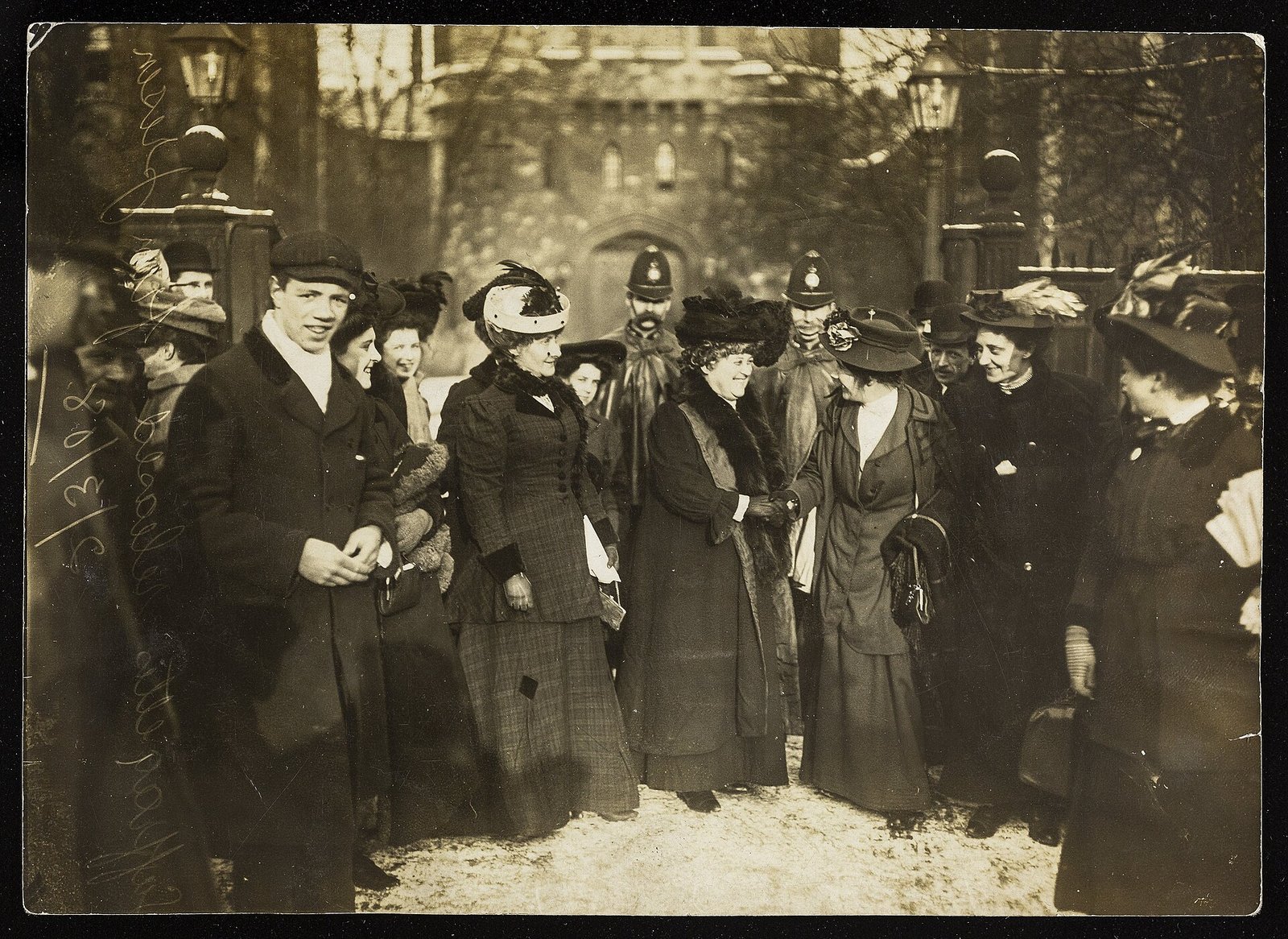
Suffragists greeting Dr Helen Bourchier outside Holloway Gaol
Dr Helen Bourchier greeted after her release from Holloway Gaol, with Teresa Billington-Greig, Alison Neilans and fellow suffragists; dated 1908–1914 by the Women’s Library. The Women’s Library, LSE Library; original photographer not identified · Wikimedia Commons · No known copyright restrictions

02 / People behind the doors

Ladbroke Gardens’s
people and stories.

A few lives that connect this neighbourhood with a much wider story.

David Fraser

No. 14 Ladbroke Gardens · 1853

A birth certificate studied by the Ladbroke Association records the journeyman stonemason living here when his daughter was born in 1853. The house was part of a development still under construction. His brief documented presence brings a craftsman and his family into a history usually told through architects and wealthy owners.

Sources and directory references

Dr Helen Johnston Bourchier

No. 15 Ladbroke Gardens · listed in 1894

The guide names Helen Bourchier at No. 15 in January 1894 and explicitly records her medical qualification. She had practised medicine in Paris and India before becoming active in the Women’s Freedom League. Arrested during suffrage protests in 1908, she also took part in the demonstration at the House of Commons that October. Her address reveals a doctor and campaigner within Ladbroke Gardens.

Sources and directory references

Selected directory observations: Webster’s 1894, printed page 155 (PDF page 226), column 4: 15 BOURCHIER, Miss Helen, M.D... Page references are PDF pages. These observations do not establish continuous residence.

Alfred Percy Sinnett

No. 7 Ladbroke Gardens · listed in 1890

Sinnett is named at No. 7 in Webster’s 1890. A journalist who had edited the Pioneer in India, he became a leading advocate of Theosophy. His books The Occult World and Esoteric Buddhism presented the movement’s spiritual claims to English-speaking readers. The listing places a prominent participant in Victorian debates about religion and occult belief in Ladbroke Gardens.

Sources and directory references

Selected directory observations: Webster’s 1890, printed page 154 (PDF page 229), column 1: 7 SINNETT, A. P... Page references are PDF pages. These observations do not establish continuous residence.

Peter Brotherhood

No. 25 Ladbroke Gardens · listed in 1879

The engineer is listed at No. 25 in 1879. Brotherhood had entered business with G. D. Kittoe in 1867 and developed a distinctive engine with three cylinders arranged at 120 degrees in 1872. The firm that bore his name later made high-speed engines, turbines and compressors. His home adds practical mechanical invention to the scientific and reform connections of Ladbroke Gardens.

Sources and directory references

Selected directory observations: Webster’s 1879, printed page 149 (PDF page 214), column 1: 25 BROTHERHOOD, P... Page references are PDF pages. These observations do not establish continuous residence.

04 / Keep exploring

More history.
Freely discovered.

These collections are a good place to follow your curiosity. Browse their online records free; copies, downloads or permission to reproduce images may carry a charge.

More nearby streets in the London Picture Archive: Arundel Gardens

Streets.London is a project by Infrastructure.London.
More ways we care for London’s homes and gardens.

Your details, thoughtfully handled.

Who we are. Streets.London is a project of London Infrastructure Solutions.

Launch updates. With your consent, we use your email address, optional street and postcode interests, the page where you signed up, and any organisation and property-count details you provide to handle group enquiries and send Streets.London launch and record-availability updates. These details are submitted to Brevo to manage our subscriber list. The optional email-update form does not create an account or purchase anything. Free account registration is separate; see our account privacy notice.

Keeping and removing your details. We keep signup information while it is needed for these updates. You can withdraw consent, ask for a copy or correction, or request deletion using the unsubscribe link in our emails, by replying to an update from us or using the London Infrastructure Solutions contact form. We will stop updates when you withdraw consent.

Services we use. Our hosting provider serves this website. Brevo processes signup details and manages our email updates, while Cloudflare Turnstile checks for automated abuse. These providers may process information outside the UK. We do not sell your signup information.

Analytics. If you allow optional analytics, Google Analytics helps us understand page visits and completed signups. We do not send your form email address, street interest or postcode to Google Analytics. Your cookie choice is stored on this device and can be changed using “Cookie choices”.

Your rights. You may ask us to access, correct or delete your information or withdraw consent. You can also raise a concern with the UK Information Commissioner’s Office at ico.org.uk.

Last updated: 15 November 2026.