01 / Soho, Westminster

Little Argyll Street
History behind the address.

Little Argyll Street was formed during the redevelopment of the Argyll estate in the 1730s and was completed in 1739–40. The scheme cut through part of the earlier mansion and its grounds to create smaller houses and new streets. It belonged to a neighbourhood of professional households on the western edge of Soho, close to the older routes of King Street, now Kingly Street, and Swallow Street.

The creation of Regent Street in the early nineteenth century changed that setting. The new thoroughfare cut through the older street network and brought much larger commercial frontages to its western edge. Little Argyll Street survives as the short link eastwards to Argyll Street, near Oxford Circus. Its narrow width contrasts with the tall stone-faced buildings around it, preserving a trace of the earlier layout within the busy shopping district.

History sources
Explore its people and history
Little Argyll Street looking towards Regent Street, photographed in December 2011.
Little Argyll Street looking towards Regent Street, photographed in December 2011. Freepenguin · Wikimedia Commons · CC BY-SA 3.0 · Resized for display; no content changes

This history is growing. Further directory research and photographs will be added.

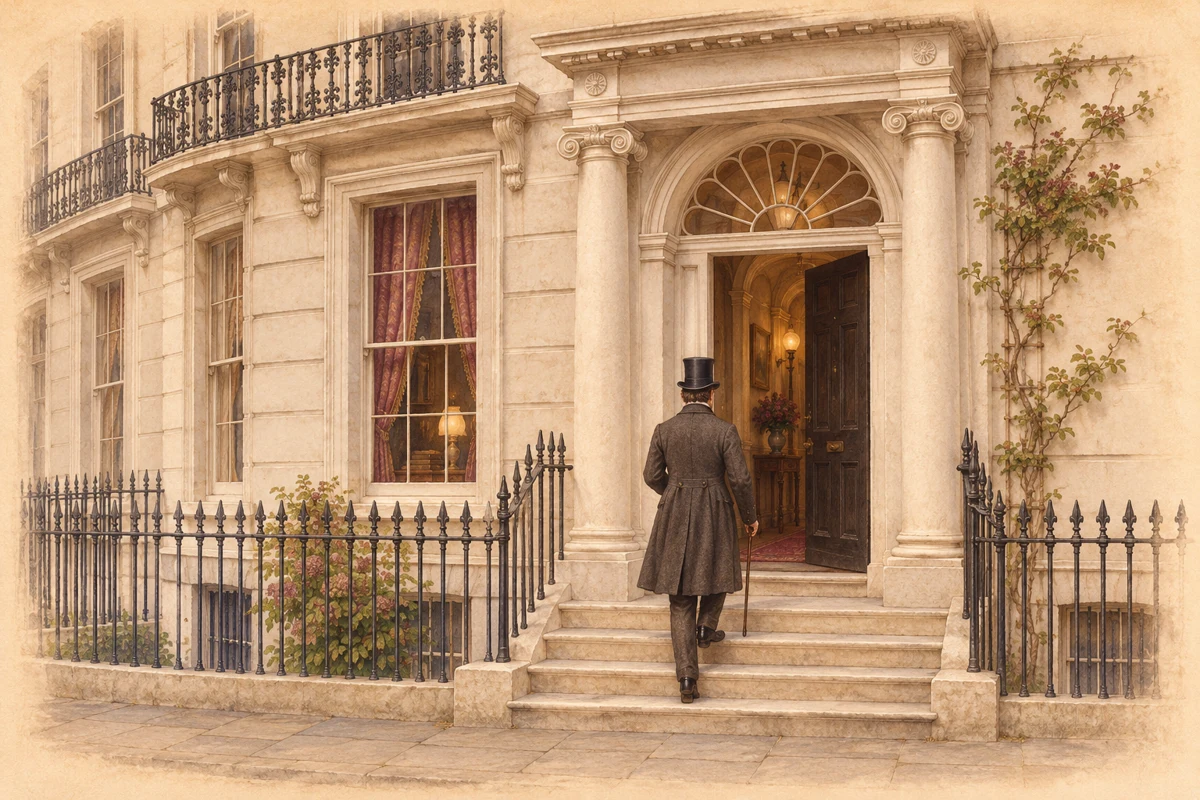
Illustration of a Victorian gentleman entering a London terraced house, viewed from behind
Another day, another life, behind a familiar door.AI-generated period illustration; not an archival photograph.

02 / People behind the doors

Little Argyll Street’s
people and stories.

A few lives that connect this neighbourhood with a much wider story.

Ralph Payne, Lord Lavington

Little Argyll Street · listed in 1796 and 1798

Boyle’s lists Lord Lavington on Little Argyll Street in both editions. Ralph Payne was a politician and governor of the Leeward Islands, created Baron Lavington in 1795. His wealth and career were tied to Caribbean sugar plantations and the ownership of enslaved people, documented in the family papers held at Yale.

Sources and directory references

Selected directory observations: Boyle’s Court Guide, 1796, PDF p. 20, col. 2; Boyle’s Court Guide, 1798, PDF p. 17, col. 1. Page references are PDF pages. These observations do not establish continuous residence.

Mary Dobson

Historic No. 2 Little Argyll Street · listed in 1841

Mrs Mary Dobson is listed as a milliner at No. 2. Her named business places women’s hatmaking among the small clothing trades beside Regent Street.

Sources and directory references

Selected directory observations: Kelly’s Post Office London Directory, 1841, PDF p. 178, col. 2. Page references are PDF pages. These observations do not establish continuous residence.

Sophia Salmon

Historic No. 5 Little Argyll Street · listed in 1841

Miss Sophia Salmon also worked as a milliner, at No. 5. The same numbered premises has a separate entry for John Read & Co., tailors, recording more than one clothing business at this address.

Sources and directory references

Selected directory observations: Kelly’s Post Office London Directory, 1841, PDF p. 178, col. 2. Page references are PDF pages. These observations do not establish continuous residence.

John King

Historic No. 1 Little Argyll Street · listed in 1841

John King is described as a coach herald painter at No. 1. His specialist occupation involved heraldic decoration for carriages, adding a different craft to a street otherwise strongly represented by clothing makers.

Sources and directory references

Selected directory observations: Kelly’s Post Office London Directory, 1841, PDF p. 178, col. 2. Page references are PDF pages. These observations do not establish continuous residence.

William Sands

Historic No. 6 Little Argyll Street · listed in 1841 and 1847

William Sands appears at No. 6 in both editions as a tailor and habit maker. The repeated address documents his business six years apart, supplying clothing including riding dress.

Sources and directory references

Selected directory observations: Kelly’s Post Office London Directory, 1841, PDF p. 178, col. 2; Kelly’s Post Office London Directory, 1847, PDF p. 354, col. 2. Page references are PDF pages. These observations do not establish continuous residence.

04 / Keep exploring

More history.
Freely discovered.

These collections are a good place to follow your curiosity. Browse their online records free; copies, downloads or permission to reproduce images may carry a charge.

Streets.London is a project by Infrastructure.London.
More ways we care for London’s homes and gardens.

Your details, thoughtfully handled.

Who we are. Streets.London is a project of London Infrastructure Solutions.

Launch updates. With your consent, we use your email address, optional street and postcode interests, the page where you signed up, and any organisation and property-count details you provide to handle group enquiries and send Streets.London launch and record-availability updates. These details are submitted to Brevo to manage our subscriber list. The optional email-update form does not create an account or purchase anything. Free account registration is separate; see our account privacy notice.

Keeping and removing your details. We keep signup information while it is needed for these updates. You can withdraw consent, ask for a copy or correction, or request deletion using the unsubscribe link in our emails, by replying to an update from us or using the London Infrastructure Solutions contact form. We will stop updates when you withdraw consent.

Services we use. Our hosting provider serves this website. Brevo processes signup details and manages our email updates, while Cloudflare Turnstile checks for automated abuse. These providers may process information outside the UK. We do not sell your signup information.

Analytics. If you allow optional analytics, Google Analytics helps us understand page visits and completed signups. We do not send your form email address, street interest or postcode to Google Analytics. Your cookie choice is stored on this device and can be changed using “Cookie choices”.

Your rights. You may ask us to access, correct or delete your information or withdraw consent. You can also raise a concern with the UK Information Commissioner’s Office at ico.org.uk.

Last updated: 15 November 2026.