

01 / Marylebone · NW1

Melbury Terrace
History behind the address.

Melbury Terrace belonged to the residential streets around Blandford Square and Lisson Grove, in the area transformed by Marylebone’s railway development. The nineteenth-century address described a small terrace of separate households, quite different from the scale of the station and office buildings that later occupied the neighbourhood. Its setting was firmly within Marylebone; it should not be confused with Melbury Road, the better-known artists’ street beside Holland Park in Kensington.

The arrival and expansion of the railway changed the surrounding street pattern and removed much of this earlier residential fabric. The name survived into the twentieth century as the address of Melbury House, headquarters of the British Waterways Board, beside the station. Later office redevelopment changed the scene again. A view from Hayes Place today shows that larger modern frontage, providing a useful contrast with the compact domestic addresses recorded in the Victorian directories.

History sources
Explore its people and history
Looking from Hayes Place towards offices on the redeveloped Melbury Terrace site: a contextual modern view, not the Victorian houses; photograph by Robin Stott, Wikimedia Commons, CC BY-SA 2.0.
Looking from Hayes Place towards offices on the redeveloped Melbury Terrace site: a contextual modern view, not the Victorian houses; photograph by Robin Stott, Wikimedia Commons, CC BY-SA 2.0. Robin Stott · Wikimedia Commons · CC BY-SA 2.0

This history is growing. Further directory research and photographs will be added.

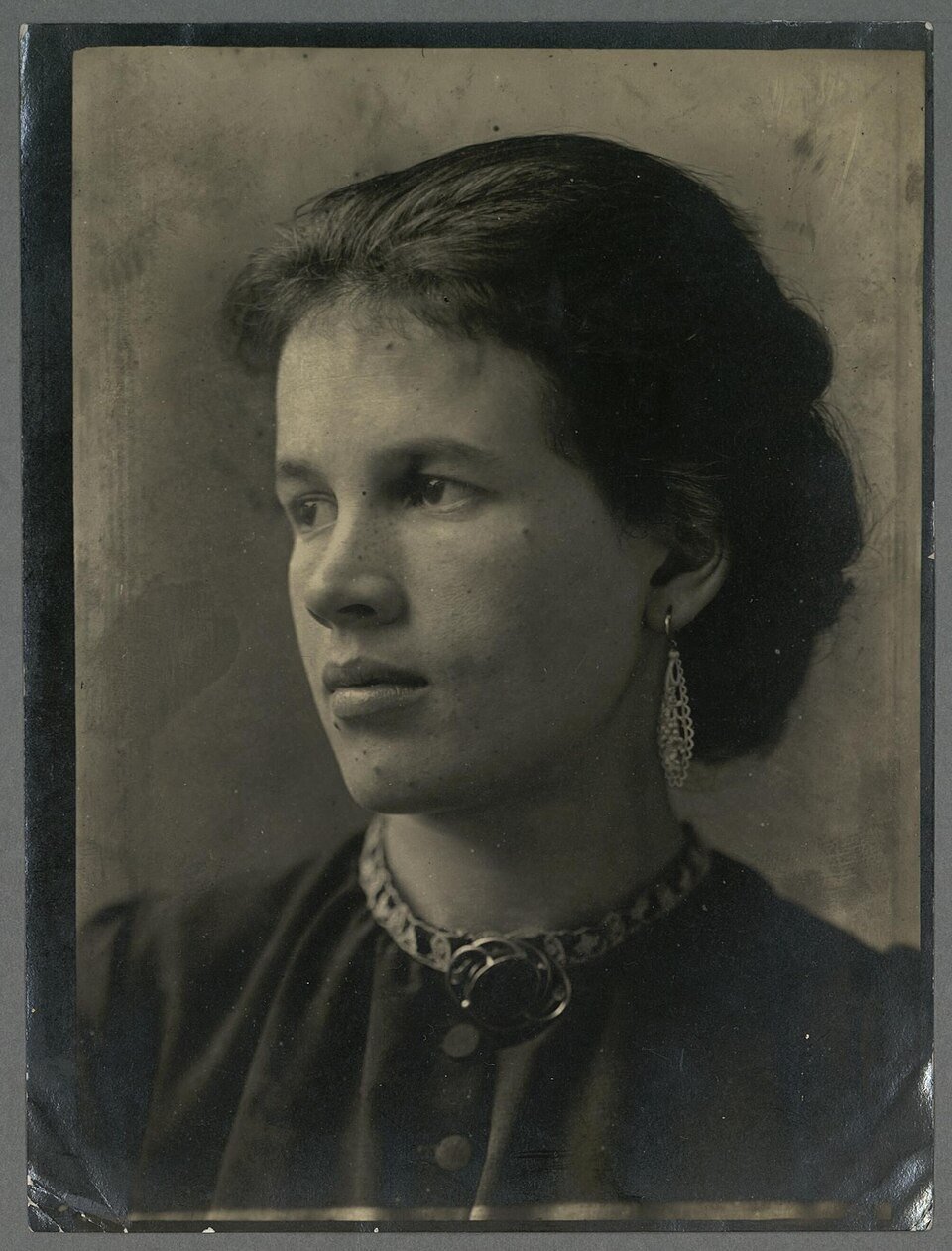
Ida Nettleship, later Ida John; anonymous photograph from the National Library of Wales portrait archive, via Wikimedia Commons, public domain.
Ida Nettleship, later Ida John; anonymous photograph from the National Library of Wales portrait archive, via Wikimedia Commons, public domain. anonymous · Wikimedia Commons · Public domain

02 / People behind the doors

Melbury Terrace’s
people and stories.

A few lives that connect this neighbourhood with a much wider story.

Ada Nettleship

No. 2 Melbury Terrace · family home documented in 1881

Nettleship was a dressmaker and costume maker associated with aesthetic and rational dress. She made Constance Lloyd’s wedding dress and created the beetle-wing costume worn by Ellen Terry as Lady Macbeth, working from Alice Comyns Carr’s design. In 1881 her business employed ten women and two girls. Her residence is independently documented; the directories name her husband as householder.

Sources and directory references

Selected directory observations: Household listing under John Trivett Nettleship: Webster’s 1881, printed page 165 (PDF page 232), column 2: 2 NETTLESHIP, J. Т.; Household listing under John Trivett Nettleship: Webster’s 1885, printed page 168 (PDF page 244), column 3: 2 Nettleship, J. T.. Page references are PDF pages. These observations do not establish continuous residence.


John Trivett Nettleship

No. 2 Melbury Terrace · listed in 1885–86

Nettleship became known for paintings and illustrations of wild animals, often drawing on studies made at London Zoo. His subjects included lions, tigers and polar bears, and he exhibited at the Royal Academy and Grosvenor Gallery. He also wrote an early critical study of Robert Browning’s poetry, which led to a friendship with the poet. Webster’s places him at No. 2.

Sources and directory references

Selected directory observations: Webster’s 1885, printed page 168 (PDF page 244), column 3: 2 Nettleship, J. T.; Webster’s 1886, printed page 170 (PDF page 245), column 3: 2 NETTLESHIP, J. T.. Page references are PDF pages. These observations do not establish continuous residence.
Ida Nettleship, later Ida John

No. 2 Melbury Terrace · childhood home in 1881

Ida lived here as a young child in the Nettleship family. She later trained at the Slade and studied with Whistler in Paris, where she shared a flat with Gwen John and Gwen Salmond. Her own artistic ambitions and experiences survive in her letters, published as The Good Bohemian. The directory evidence is a family-household listing under her father, supported by an independent account of her childhood home.

Sources and directory references

Selected directory observations: Family-household listing under her father, John Trivett Nettleship: Webster’s 1881, printed page 165 (PDF page 232), column 2: 2 NETTLESHIP, J. Т.; Family-household listing under her father, John Trivett Nettleship: Webster’s 1885, printed page 168 (PDF page 244), column 3: 2 Nettleship, J. T.. Page references are PDF pages. These observations do not establish continuous residence.

Edward Richardson

No. 7 Melbury Terrace · listed as a sculptor in 1848–49

Richardson was a sculptor and archaeologist who specialised in restoring medieval monuments. He worked on the effigies in the Temple Church and the Arundel tomb in Chichester Cathedral, where he reconstructed the joined hands of the reclining couple. His restorations attracted debate, and he published illustrated accounts of the monuments. The guides explicitly identify his profession at No. 7.

Sources and directory references

Selected directory observations: Webster’s 1848, printed page 122 (PDF page 131), column 2: 7 RICHARDSON,E. scul.; Webster’s 1849, printed page 123 (PDF page 116), column 2: 7 RICHARDSON,E. scul.. Page references are PDF pages. These observations do not establish continuous residence.

04 / Keep exploring

More history.
Freely discovered.

These collections are a good place to follow your curiosity. Browse their online records free; copies, downloads or permission to reproduce images may carry a charge.

Streets.London is a project by Infrastructure.London.
More ways we care for London’s homes and gardens.

Your details, thoughtfully handled.

Who we are. Streets.London is a project of London Infrastructure Solutions.

Launch updates. With your consent, we use your email address, optional street and postcode interests, the page where you signed up, and any organisation and property-count details you provide to handle group enquiries and send Streets.London launch and record-availability updates. These details are submitted to Brevo to manage our subscriber list. The optional email-update form does not create an account or purchase anything. Free account registration is separate; see our account privacy notice.

Keeping and removing your details. We keep signup information while it is needed for these updates. You can withdraw consent, ask for a copy or correction, or request deletion using the unsubscribe link in our emails, by replying to an update from us or using the London Infrastructure Solutions contact form. We will stop updates when you withdraw consent.

Services we use. Our hosting provider serves this website. Brevo processes signup details and manages our email updates, while Cloudflare Turnstile checks for automated abuse. These providers may process information outside the UK. We do not sell your signup information.

Analytics. If you allow optional analytics, Google Analytics helps us understand page visits and completed signups. We do not send your form email address, street interest or postcode to Google Analytics. Your cookie choice is stored on this device and can be changed using “Cookie choices”.

Your rights. You may ask us to access, correct or delete your information or withdraw consent. You can also raise a concern with the UK Information Commissioner’s Office at ico.org.uk.

Last updated: 15 November 2026.