01 / Westminster

Old Palace Yard
History behind the address.

Old Palace Yard occupies a prominent position beside the Palace of Westminster and Westminster Abbey. Its setting combines monumental public buildings with remnants of the smaller-scale accommodation that served the parliamentary district. The open space makes the contrast particularly visible: individual house fronts stand close to architecture designed for national institutions.

Historic England identifies Nos. 6 and 7, now combined as No. 7, as a pair of townhouses built around 1754–56 for the Clerks of the Parliaments, with later alterations. Their stone frontage and domestic proportions preserve a different scale from the neighbouring palace. Offices and homes were closely connected here, and a directory address should not automatically be interpreted as exclusively residential. The historical entries below belong to that mixed world of accommodation, administration and professional work around Parliament.

History sources
Explore its people and history
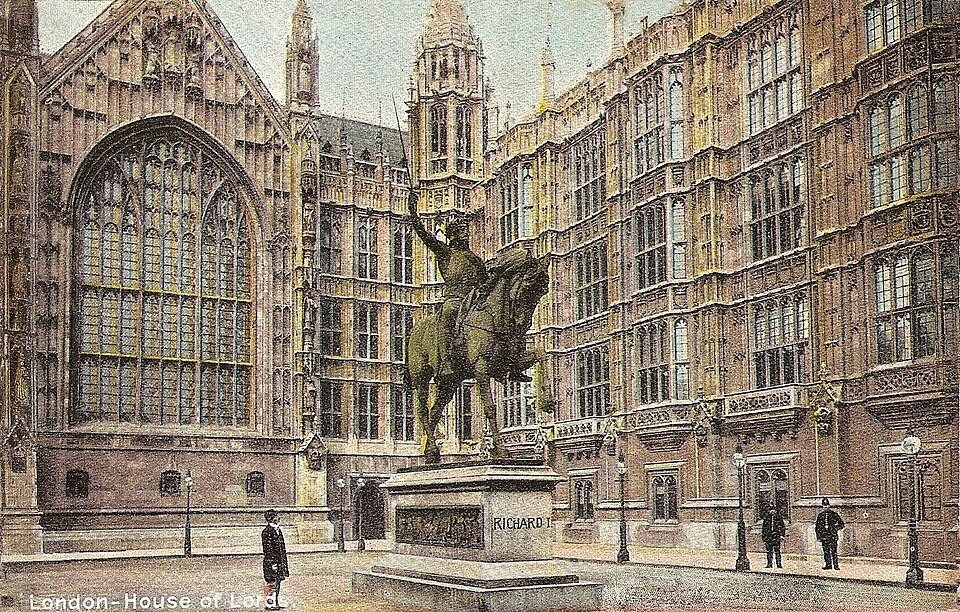
An early-twentieth-century colourised view of Old Palace Yard.
An early-twentieth-century colourised view of Old Palace Yard. Unknown author Unknown author · Wikimedia Commons · Public domain

This history is growing. Further directory research and photographs will be added.

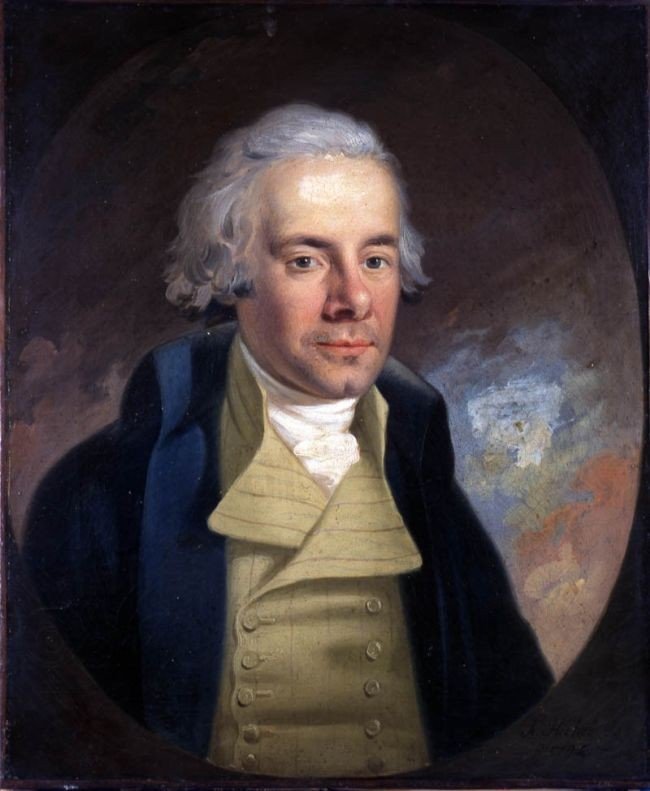
William Wilberforce, parliamentary abolitionist.
William Wilberforce, parliamentary abolitionist. Anton Hickel · Wikimedia Commons · Public domain

02 / People behind the doors

Old Palace Yard’s
people and stories.

A few lives that connect this neighbourhood with a much wider story.

William Wilberforce

Historical No. unnumbered · listed in 1796

William Wilberforce was the MP closely associated with the parliamentary campaign against the slave trade. Boyle lists him in Old Palace Yard without a house number.

Sources and directory references

Selected directory observations: Boyle’s Court Guide 1796, PDF page 1796_BG::p52, column 1: unnumbered, William Wilberforce, William Wilberforce. Page references are PDF pages. These observations do not establish continuous residence.

Sir Charles Barry

Historical No. 1 · listed in 1853

Sir Charles Barry was the architect responsible for the new Palace of Westminster, working with A. W. N. Pugin. Webster lists him as an architect at No. 1 Old Palace Yard.

Sources and directory references

Selected directory observations: Webster’s Directory 1853, printed page 118 (PDF page 163), column 1: 1, Sir Charles Barry, architect. Page references are PDF pages. These observations do not establish continuous residence.

04 / Keep exploring

More history.
Freely discovered.

These collections are a good place to follow your curiosity. Browse their online records free; copies, downloads or permission to reproduce images may carry a charge.

Streets.London is a project by Infrastructure.London.
More ways we care for London’s homes and gardens.

Your details, thoughtfully handled.

Who we are. Streets.London is a project of London Infrastructure Solutions.

Launch updates. With your consent, we use your email address, optional street and postcode interests, the page where you signed up, and any organisation and property-count details you provide to handle group enquiries and send Streets.London launch and record-availability updates. These details are submitted to Brevo to manage our subscriber list. The optional email-update form does not create an account or purchase anything. Free account registration is separate; see our account privacy notice.

Keeping and removing your details. We keep signup information while it is needed for these updates. You can withdraw consent, ask for a copy or correction, or request deletion using the unsubscribe link in our emails, by replying to an update from us or using the London Infrastructure Solutions contact form. We will stop updates when you withdraw consent.

Services we use. Our hosting provider serves this website. Brevo processes signup details and manages our email updates, while Cloudflare Turnstile checks for automated abuse. These providers may process information outside the UK. We do not sell your signup information.

Analytics. If you allow optional analytics, Google Analytics helps us understand page visits and completed signups. We do not send your form email address, street interest or postcode to Google Analytics. Your cookie choice is stored on this device and can be changed using “Cookie choices”.

Your rights. You may ask us to access, correct or delete your information or withdraw consent. You can also raise a concern with the UK Information Commissioner’s Office at ico.org.uk.

Last updated: 15 November 2026.