01 / Marylebone

Oldbury Place
History behind the address.

Oldbury Place developed as Nottingham Mews behind the houses of Nottingham Place. Its original access came from Marylebone High Street, allowing service traffic to reach the interiors of the surrounding blocks. The enclosed layout placed stables and working buildings close to the houses they supported, while keeping them away from the principal residential frontages.

The mews was largely rebuilt around 1892, when it acquired its present name and an additional entrance from Nottingham Street. Subsequent changes brought offices and homes into the smaller buildings, although the enclosed scale remains distinctive. The Princess Grace Hospital later occupied much of the northern end. These layers of rebuilding mean that the numbered Victorian addresses below describe the earlier mews and should not automatically be matched to present-day house fronts.

History sources
Explore its people and history
Oldbury Place, formerly Nottingham Mews.
Oldbury Place, formerly Nottingham Mews. Free Man · Wikimedia Commons · CC BY-SA 2.0

This history is growing. Further directory research and photographs will be added.

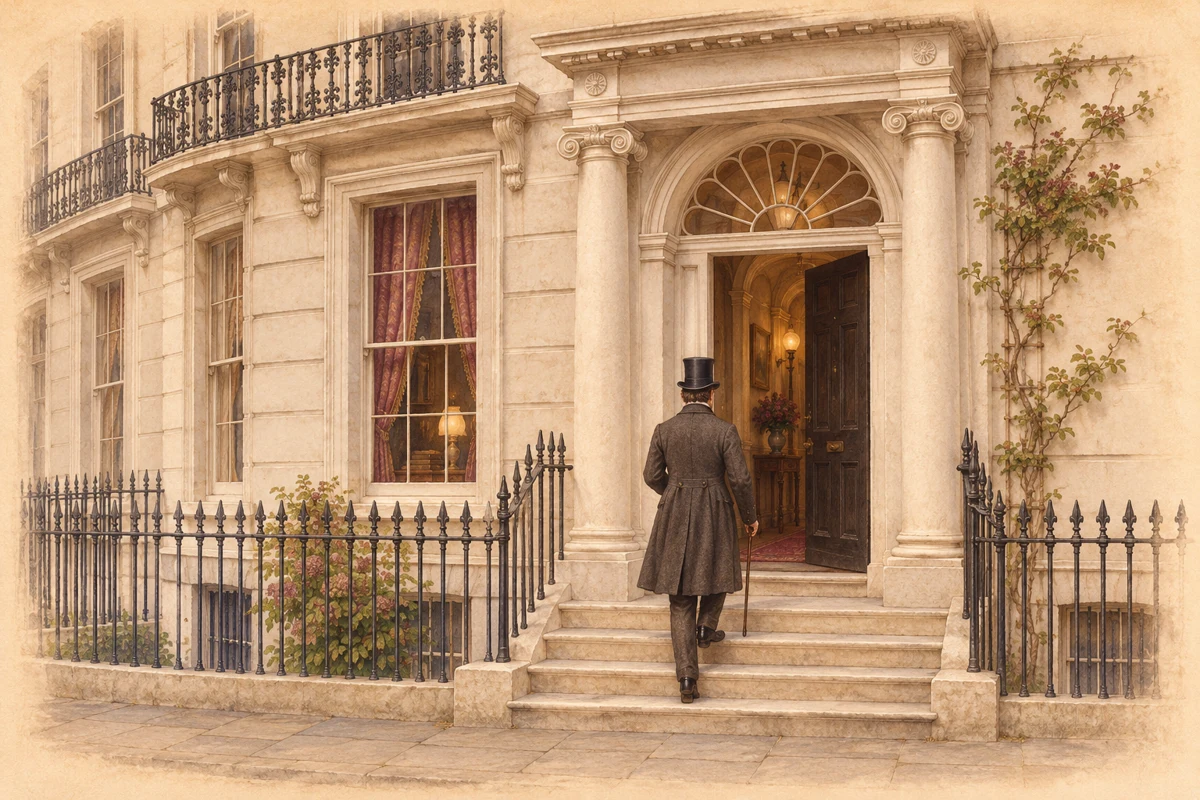
Illustration of a Victorian gentleman entering a London terraced house, viewed from behind
Another day, another life, behind a familiar door.AI-generated period illustration; not an archival photograph.

02 / People behind the doors

Oldbury Place’s
people and stories.

A few lives that connect this neighbourhood with a much wider story.

Henry Wells

Historical No. 3 Nottingham Mews · listed in 1882

Henry Wells was a carman at No. 3 Nottingham Mews, the earlier name of Oldbury Place. A carman carried goods by cart or wagon. His entry records the everyday transport work that took place behind the larger Marylebone houses, before the mews was rebuilt and renamed.

Sources and directory references

Selected directory observations: Kelly’s Post Office Directory 1882, printed page 501 (PDF page 524), column 3: 3, Henry Wells, carman. Page references are PDF pages. These observations do not establish continuous residence.

John Loveland

Historical No. 13 Nottingham Mews · listed in 1882

John Loveland was a coach maker at No. 13 Nottingham Mews. His trade placed him within the network of carriage-making and repair businesses serving a horse-drawn city. The number belongs to the mews before its late Victorian rebuilding.

Sources and directory references

Selected directory observations: Kelly’s Post Office Directory 1882, printed page 501 (PDF page 524), column 3: 13, John Loveland, coach maker. Page references are PDF pages. These observations do not establish continuous residence.

Benjamin Poppy

Historical No. 30 Nottingham Mews · listed in 1882

Benjamin Poppy worked as a wheelwright at No. 30 Nottingham Mews. Wheelwrights made and repaired the wooden wheels used on carts and carriages. His named entry adds another skilled occupation to the small group of businesses recorded here in 1882.

Sources and directory references

Selected directory observations: Kelly’s Post Office Directory 1882, printed page 501 (PDF page 524), column 3: 30, Benjamin Poppy, wheelwright. Page references are PDF pages. These observations do not establish continuous residence.

04 / Keep exploring

More history.
Freely discovered.

These collections are a good place to follow your curiosity. Browse their online records free; copies, downloads or permission to reproduce images may carry a charge.

More nearby streets in the London Picture Archive: Nottingham Mews

Streets.London is a project by Infrastructure.London.
More ways we care for London’s homes and gardens.

Your details, thoughtfully handled.

Who we are. Streets.London is a project of London Infrastructure Solutions.

Launch updates. With your consent, we use your email address, optional street and postcode interests, the page where you signed up, and any organisation and property-count details you provide to handle group enquiries and send Streets.London launch and record-availability updates. These details are submitted to Brevo to manage our subscriber list. The optional email-update form does not create an account or purchase anything. Free account registration is separate; see our account privacy notice.

Keeping and removing your details. We keep signup information while it is needed for these updates. You can withdraw consent, ask for a copy or correction, or request deletion using the unsubscribe link in our emails, by replying to an update from us or using the London Infrastructure Solutions contact form. We will stop updates when you withdraw consent.

Services we use. Our hosting provider serves this website. Brevo processes signup details and manages our email updates, while Cloudflare Turnstile checks for automated abuse. These providers may process information outside the UK. We do not sell your signup information.

Analytics. If you allow optional analytics, Google Analytics helps us understand page visits and completed signups. We do not send your form email address, street interest or postcode to Google Analytics. Your cookie choice is stored on this device and can be changed using “Cookie choices”.

Your rights. You may ask us to access, correct or delete your information or withdraw consent. You can also raise a concern with the UK Information Commissioner’s Office at ico.org.uk.

Last updated: 15 November 2026.