

01 / South Kensington · SW7

Onslow Square
History behind the address.

Onslow Square forms part of the Smith’s Charity Estate’s nineteenth-century development. Its two garden enclosures, divided by Sumner Place, were laid out from 1839. The houses belong to the estate’s sequence of work under George Basevi, Henry Clutton and Charles James Freake.

St Paul’s Church gives the south-western corner a distinct architectural focus. Original garden railings, lawns and ornamental planting preserve the relationship between residential terraces and shared outdoor space. The square sits close to the museums that helped make South Kensington a centre of Victorian cultural life, a connection reflected in the careers of some of its residents.

History sources
Explore its people and history
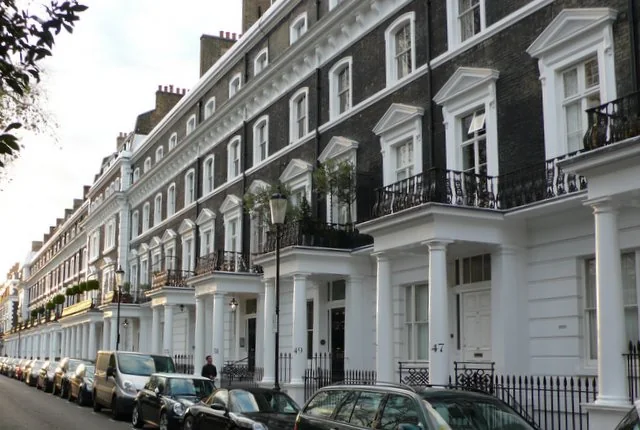
Historic houses overlooking Onslow Square.
Historic houses overlooking Onslow Square. Nigel Mykura · Wikimedia Commons · CC BY-SA 2.0
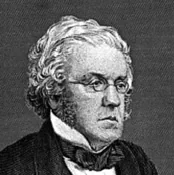
Thackeray.
Thackeray. Original source: Duyckinick, Evert A. Portrait Gallery of Eminent Men and Women in Europe and America. New York: Johnson, Wilson & Company, 1873. · Wikimedia Commons · Public domain

02 / People behind the doors

Onslow Square’s
people and stories.

A few lives that connect this neighbourhood with a much wider story.

William Makepeace Thackeray

No. 36 Onslow Square

The novelist lived at No. 36 during the 1850s. Boyle’s records him here, while surviving letters in the Morgan Library use the address on his stationery; one even signs off simply as “36”.

Sources and directory references

Selected directory observations: Boyle’s 1855, p. 191. Page references are PDF pages. These observations do not establish continuous residence.


Sir Henry Cole

No. 17 Onslow Square

The reformer and museum administrator, closely associated with the creation of the Victoria and Albert Museum, lived at No. 17. Both directories record his address, linking the square’s domestic life with the nearby institutions of design and education.

Sources and directory references

Selected directory observations: Boyle’s 1860, p. 186; Webster’s 1862, p. 201. Page references are PDF pages. These observations do not establish continuous residence.
Ernst Pauer

No. 39c Onslow Square · listed in 1868

Webster’s identifies Pauer as a professor of music at No. 39c in 1868. The Austrian pianist settled in London in 1851 and became known for historical concerts tracing the development of keyboard music. His teaching, lectures and published manuals helped audiences and pupils understand music from earlier centuries. Later guides list him in the separately numbered Onslow Houses within the square.

Sources and directory references

Selected directory observations: Webster’s 1868, printed page 163 (PDF page 204), column 1: 39c PAUER, E. prof. of music.. Page references are PDF pages. These observations do not establish continuous residence.

Baron Carlo Marochetti

Historic No. 34 Onslow Square · listed in 1851

The sculptor appears at the historic No. 34 in Webster’s 1851. The Henry Moore Foundation’s research records his studio at this address after he settled in London following the revolution of 1848. His equestrian Richard Coeur de Lion became one of London’s best-known public sculptures. His home and nearby working premises helped establish an artistic community around Onslow Square.

Sources and directory references

Selected directory observations: Webster’s 1851, printed page 144 (PDF page 187), column 1: 34 MAROCHETTI, Baron.. Page references are PDF pages. These observations do not establish continuous residence.

04 / Keep exploring

More history.
Freely discovered.

These collections are a good place to follow your curiosity. Browse their online records free; copies, downloads or permission to reproduce images may carry a charge.

Streets.London is a project by Infrastructure.London.
More ways we care for London’s homes and gardens.

Your details, thoughtfully handled.

Who we are. Streets.London is a project of London Infrastructure Solutions.

Launch updates. With your consent, we use your email address, optional street and postcode interests, the page where you signed up, and any organisation and property-count details you provide to handle group enquiries and send Streets.London launch and record-availability updates. These details are submitted to Brevo to manage our subscriber list. The optional email-update form does not create an account or purchase anything. Free account registration is separate; see our account privacy notice.

Keeping and removing your details. We keep signup information while it is needed for these updates. You can withdraw consent, ask for a copy or correction, or request deletion using the unsubscribe link in our emails, by replying to an update from us or using the London Infrastructure Solutions contact form. We will stop updates when you withdraw consent.

Services we use. Our hosting provider serves this website. Brevo processes signup details and manages our email updates, while Cloudflare Turnstile checks for automated abuse. These providers may process information outside the UK. We do not sell your signup information.

Analytics. If you allow optional analytics, Google Analytics helps us understand page visits and completed signups. We do not send your form email address, street interest or postcode to Google Analytics. Your cookie choice is stored on this device and can be changed using “Cookie choices”.

Your rights. You may ask us to access, correct or delete your information or withdraw consent. You can also raise a concern with the UK Information Commissioner’s Office at ico.org.uk.

Last updated: 15 November 2026.