

01 / Marylebone and Regent’s Park · NW1 and NW8

Park Road
History behind the address.

Park Road follows the western side of Regent’s Park, linking the Marylebone streets around Baker Street with St John’s Wood. Its setting grew out of the transformation of former Crown farmland into a landscaped park and residential district. John Nash’s scheme was selected in 1811, and building continued through the following decades. The road forms an edge between the park’s open landscape and the more closely built streets to the west.

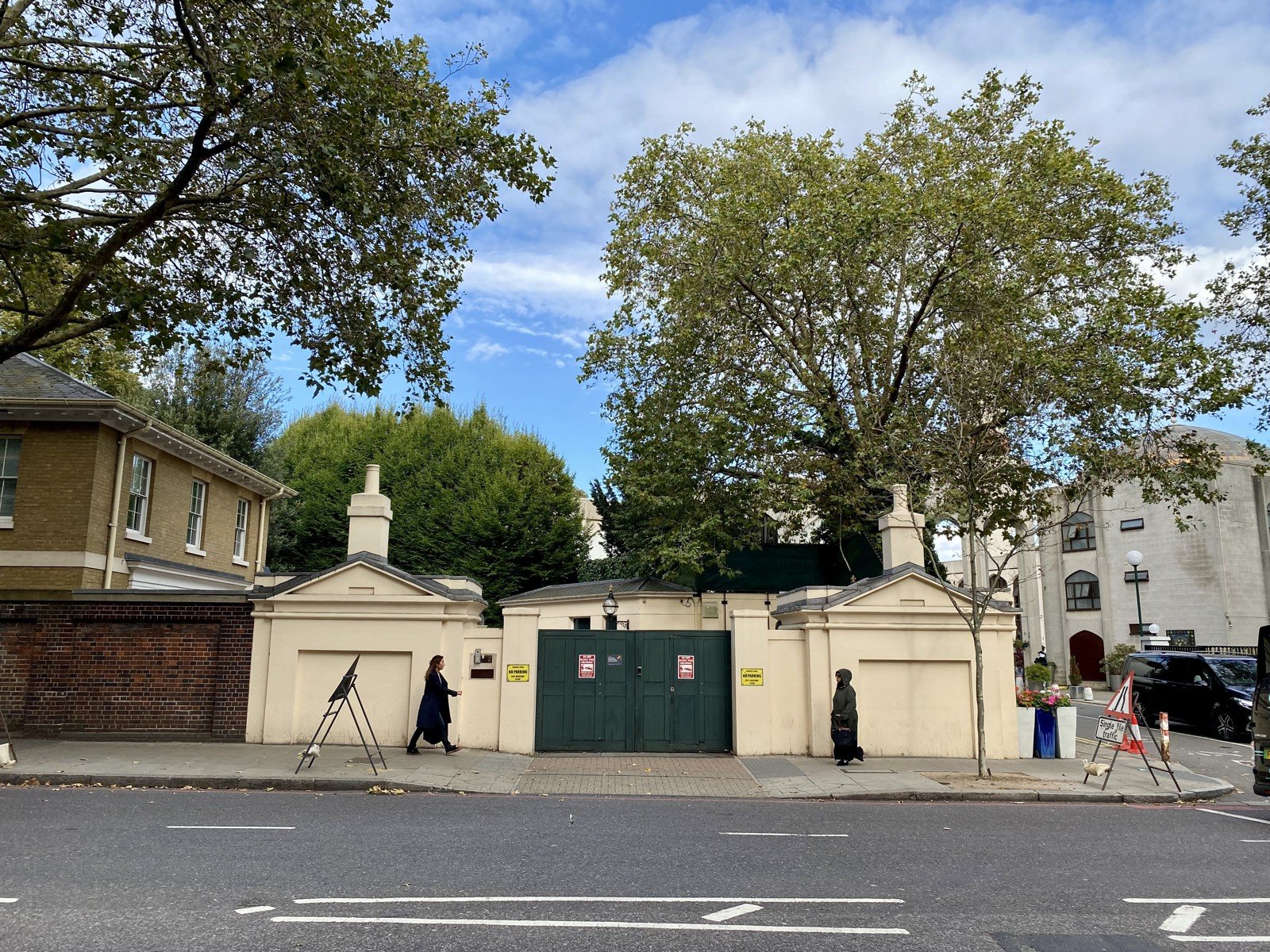
That boundary has never been architecturally uniform. Named houses and lodges, garden walls and entrances stood alongside numbered residential buildings, while later redevelopment introduced larger blocks and institutional uses. The surviving lodges at No. 150 illustrate the importance of gateways and enclosed grounds in the road’s older appearance. Trees and glimpses towards the park still give the route a different character from the streets behind it. The nineteenth-century numbers below are retained as the directories record them; they are not presented as a guide to today’s door numbers.

History sources
Explore its people and history
The lodges at No. 150 Park Road, Regent’s Park, in October 2023; photograph by No Swan So Fine, Wikimedia Commons, CC BY-SA 4.0.
The lodges at No. 150 Park Road, Regent’s Park, in October 2023; photograph by No Swan So Fine, Wikimedia Commons, CC BY-SA 4.0. No Swan So Fine · Wikimedia Commons · CC BY-SA 4.0

This history is growing. Further directory research and photographs will be added.

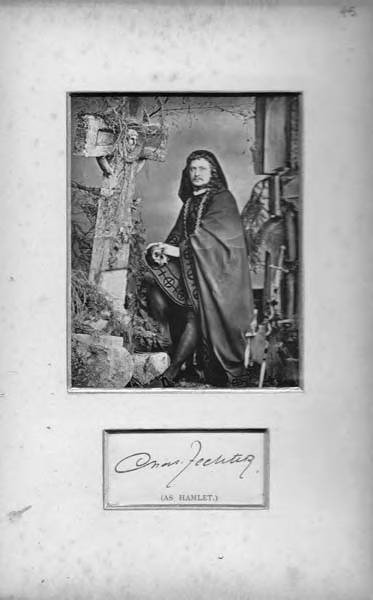
Charles Fechter in costume as Hamlet, photographed around 1860–70; State Library of New South Wales, via Wikimedia Commons, public domain.
Charles Fechter in costume as Hamlet, photographed around 1860–70; State Library of New South Wales, via Wikimedia Commons, public domain. Unknown author Unknown author · Wikimedia Commons · Public domain

02 / People behind the doors

Park Road’s
people and stories.

The old Taunton Place addresses refer to the historical Park Road frontage, not the present street of that name.

Charles Albert Fechter

No. 30 Park Road, Regent’s Park · listed in 1869–70; historical numbering

Fechter became a celebrated actor on both the French and English stage. His Hamlet attracted particular attention for its departure from established theatrical conventions, and he managed London’s Lyceum Theatre during the 1860s. Charles Dickens admired his acting and became a friend. Fechter later worked in America; these directory dates record his Park Road listing rather than prove continuous residence throughout his travels.

Sources and directory references

Selected directory observations: Boyle’s 1869, PDF page 226, column 2: 30 Charles Albert Fechter; Boyle’s 1870, PDF page 227, column 1: 30 Charles Albert Fechter. Page references are PDF pages. These observations do not establish continuous residence.


George Osbaldeston

No. 7 Park Road, Regent’s Park · listed as George Osbaldiston in 1855 and 1857

Known as Squire Osbaldeston, he was one of the conspicuous sporting figures of the nineteenth century. He played major cricket matches, rode competitively and became famous for an extraordinary endurance wager at Newmarket in 1831, covering 200 miles while changing horses. He also served briefly in Parliament. Gambling losses consumed much of his fortune, and his later life was spent in the Regent’s Park neighbourhood.

Sources and directory references

Selected directory observations: Boyle’s 1855, PDF page 199, column 2: 7 George Osbaldiston; Boyle’s 1857, PDF page 208, column 2: 7 George Osbaldiston Thomas Williams. Page references are PDF pages. These observations do not establish continuous residence.
Henry Louis Bischoffsheim

No. 29 Park Road, Regent’s Park · listed in 1853–54

Bischoffsheim belonged to a European banking family and developed his career in London finance. He took over the London business of Bischoffsheim, Goldschmidt & Company and became known as both a banker and a philanthropist. His appearance in the Park Road guides belongs to the early part of that career, long before the late-Victorian caricatures that recorded his public reputation.

Sources and directory references

Selected directory observations: Webster’s 1853, printed page 121 (PDF page 166), column 2: 29 BISCHOFFSHEIM,Hy.; Boyle’s 1854, PDF page 185, column 1: 29 Henry Bischoffsheim. Page references are PDF pages. These observations do not establish continuous residence.

Bracy Clark

Historical No. 7 Taunton Place, Park Road frontage

Boyle’s lists Bracy Clark, with variant spellings of his name, at No. 7 Taunton Place in 1825 and 1833. A veterinary surgeon and naturalist, Clark studied the horse’s hoof and the effects of shoeing. He published extensively on the care of horses and made a folding model of the hoof to explain its structure. His own 1824 publication gives this address.

Sources and directory references

Selected directory observations: Boyle’s Court Guide, 1825, PDF p. 161, col. 2; Boyle’s Court Guide, 1833, PDF p. 198, col. 2. Page references are PDF pages. These observations do not establish continuous residence.

Martha Rudd, known as Mrs Dawson

Historical No. 10 Taunton Place, Park Road frontage

Webster’s lists Mrs Dawson at No. 10 in 1875 and 1883. The Wilkie Collins Society identifies this address as the home of Martha Rudd, who used the name Mrs Dawson and had three children with the novelist. She moved here in 1874. The historical terrace stood on the Park Road frontage; it should not be confused with the present Taunton Place.

Sources and directory references

Selected directory observations: Webster’s Royal Red Book, 1875, PDF p. 311, col. 3; Webster’s Royal Red Book, 1883, PDF p. 355, col. 4. Page references are PDF pages. These observations do not establish continuous residence.

04 / Keep exploring

More history.
Freely discovered.

These collections are a good place to follow your curiosity. Browse their online records free; copies, downloads or permission to reproduce images may carry a charge.

Streets.London is a project by Infrastructure.London.
More ways we care for London’s homes and gardens.

Your details, thoughtfully handled.

Who we are. Streets.London is a project of London Infrastructure Solutions.

Launch updates. With your consent, we use your email address, optional street and postcode interests, the page where you signed up, and any organisation and property-count details you provide to handle group enquiries and send Streets.London launch and record-availability updates. These details are submitted to Brevo to manage our subscriber list. The optional email-update form does not create an account or purchase anything. Free account registration is separate; see our account privacy notice.

Keeping and removing your details. We keep signup information while it is needed for these updates. You can withdraw consent, ask for a copy or correction, or request deletion using the unsubscribe link in our emails, by replying to an update from us or using the London Infrastructure Solutions contact form. We will stop updates when you withdraw consent.

Services we use. Our hosting provider serves this website. Brevo processes signup details and manages our email updates, while Cloudflare Turnstile checks for automated abuse. These providers may process information outside the UK. We do not sell your signup information.

Analytics. If you allow optional analytics, Google Analytics helps us understand page visits and completed signups. We do not send your form email address, street interest or postcode to Google Analytics. Your cookie choice is stored on this device and can be changed using “Cookie choices”.

Your rights. You may ask us to access, correct or delete your information or withdraw consent. You can also raise a concern with the UK Information Commissioner’s Office at ico.org.uk.

Last updated: 15 November 2026.