01 / Knightsbridge · SW7

Princes Gate
History behind the address.

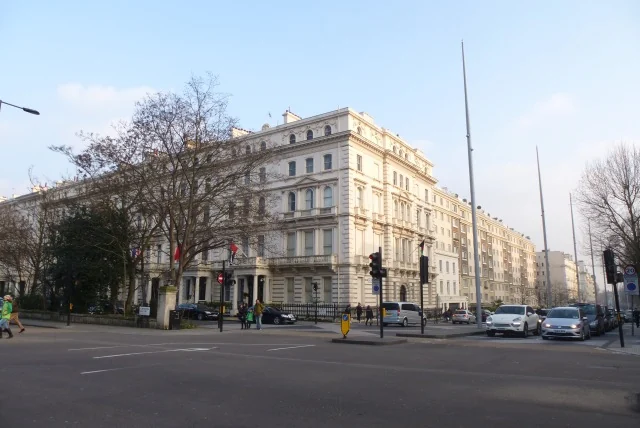
Princes Gate developed on land belonging to the Kingston House estate beside the southern edge of Hyde Park. Much of its imposing terrace was built between 1846 and 1850 by John Elger, with designs by Harvey Lonsdale Elmes. Its name referred to the nearby entrance to the park.

The terrace gave individual town houses a grand, coordinated frontage. Later building added to the road, including a group by the developer Charles James Freake in the 1860s. The directories capture the households that occupied these substantial addresses during their early decades.

History sources
Explore its people and history
Princes Gate, London.
Princes Gate, London. Princes Gate by DS Pugh · Wikimedia Commons · CC BY-SA 2.0 · Resized and converted to WebP for display.

This history is growing. Further directory research and photographs will be added.

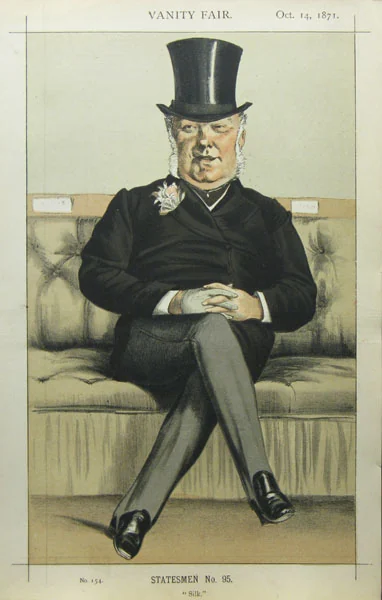
Henry William Eaton, first Baron Cheylesmore.
Henry William Eaton, first Baron Cheylesmore. James Tissot (Vanity Fair, 1871) · Wikimedia Commons · Public domain · Resized and converted to WebP for display.

02 / People behind the doors

Princes Gate’s
people and stories.

A few lives that connect this neighbourhood with a much wider story.

Henry William Eaton, first Baron Cheylesmore

Historical No. 16 Princes Gate

Boyle’s records Henry W. Eaton at No. 16, an address independently confirmed by an 1875 letter in Westminster’s archives. A businessman and art collector, he owned Edwin Landseer’s The Monarch of the Glen. His collection brought a celebrated image of the Scottish Highlands into the world of Victorian London collecting.

Sources and directory references

Selected directory observations: Boyle’s 1851, PDF p. 223 (1851_BG); Boyle’s 1854, PDF p. 195 (1854_BG). Page references are PDF pages. These observations do not establish continuous residence.

Mary Elizabeth Schenley

Historical No. 14 Princes Gate · listed as Mrs Schenley in 1893–94

Schenley was a Pittsburgh heiress whose generosity helped shape her native city even while she lived in London. In 1889 she donated 300 acres for Schenley Park, creating a lasting public landscape. The guides place her at No. 14, the house later bought from the Schenley family and joined to J. Pierpont Morgan’s neighbouring residence.

Sources and directory references

Selected directory observations: Boyle’s 1893, PDF page 242, column 1: 14 Mrs. Schenley; Boyle’s 1894, PDF page 242, column 2: 14 Mrs. Schenley. Page references are PDF pages. These observations do not establish continuous residence.

Frederick Richards Leyland

Historical No. 49 Princes Gate · listed in 1875–76

Leyland was a Liverpool shipowner and an important patron of James McNeill Whistler. His London dining room became the Peacock Room, an extraordinary interior decorated in blue and gold around his collection of porcelain. The project led to a bitter quarrel between artist and patron. The room was later dismantled and taken to America, where it became part of the Smithsonian’s collection.

Sources and directory references

Selected directory observations: Webster’s 1875, printed page 201 (PDF page 266), column 2: 49 LEYLAND , F. R. OF; Webster’s 1876, printed page 200 (PDF page 263), column 1: 49 LEYLAND, F. R.. Page references are PDF pages. These observations do not establish continuous residence.

04 / Keep exploring

More history.
Freely discovered.

These collections are a good place to follow your curiosity. Browse their online records free; copies, downloads or permission to reproduce images may carry a charge.

Streets.London is a project by Infrastructure.London.
More ways we care for London’s homes and gardens.

Your details, thoughtfully handled.

Who we are. Streets.London is a project of London Infrastructure Solutions.

Launch updates. With your consent, we use your email address, optional street and postcode interests, the page where you signed up, and any organisation and property-count details you provide to handle group enquiries and send Streets.London launch and record-availability updates. These details are submitted to Brevo to manage our subscriber list. The optional email-update form does not create an account or purchase anything. Free account registration is separate; see our account privacy notice.

Keeping and removing your details. We keep signup information while it is needed for these updates. You can withdraw consent, ask for a copy or correction, or request deletion using the unsubscribe link in our emails, by replying to an update from us or using the London Infrastructure Solutions contact form. We will stop updates when you withdraw consent.

Services we use. Our hosting provider serves this website. Brevo processes signup details and manages our email updates, while Cloudflare Turnstile checks for automated abuse. These providers may process information outside the UK. We do not sell your signup information.

Analytics. If you allow optional analytics, Google Analytics helps us understand page visits and completed signups. We do not send your form email address, street interest or postcode to Google Analytics. Your cookie choice is stored on this device and can be changed using “Cookie choices”.

Your rights. You may ask us to access, correct or delete your information or withdraw consent. You can also raise a concern with the UK Information Commissioner’s Office at ico.org.uk.

Last updated: 15 November 2026.