01 / Regent’s Park and Primrose Hill · NW1

St Mark’s Square
History behind the address.

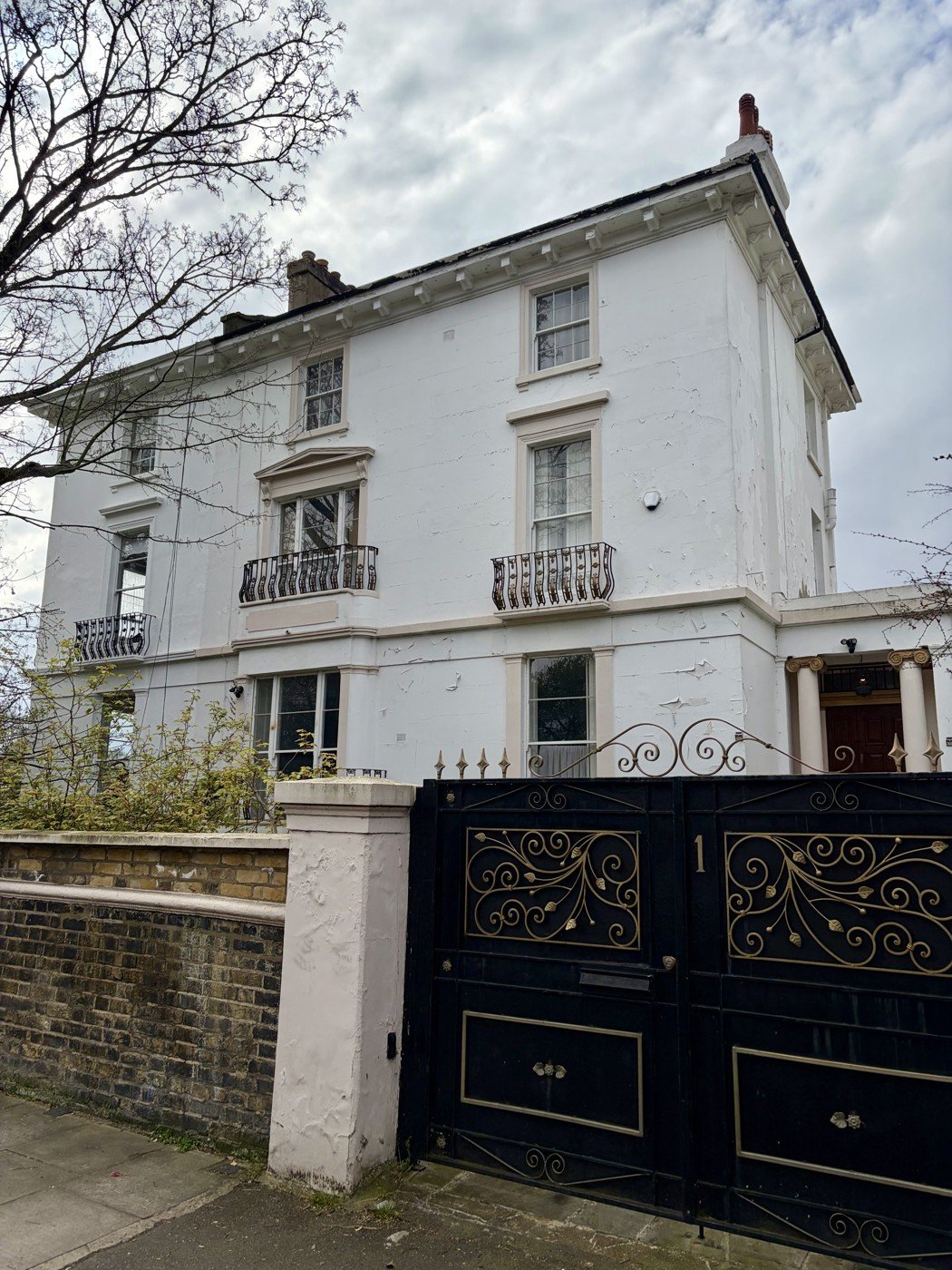
St Mark’s Square occupies a transition between the open landscape beside Regent’s Park and the closely built streets of Primrose Hill. Its substantial nineteenth-century houses have a restrained grandeur: four storeys above basements, narrow frontages and carefully balanced details give the terraces a coherent appearance. Railings enclose deep front areas, maintaining a formal separation between the houses and the pavement. Views towards the park contrast with the more urban approach from Princess Road.

The square’s setting was shaped by the development of the surrounding district and by St Mark’s Church, consecrated in 1853 to serve the growing neighbourhood. Primrose Hill had opened to the public in the preceding decade, bringing protected open land into a district increasingly surrounded by houses. The result is a residential enclave whose character depends as much on nearby greenery and broad approaches as on its architecture. The church, terraces and routes towards the park remain closely connected parts of that setting.

History sources
Explore its people and history
No. 1 St Mark’s Square, Primrose Hill, photographed in April 2026; No Swan So Fine, Wikimedia Commons, CC BY-SA 4.0.
No. 1 St Mark’s Square, Primrose Hill, photographed in April 2026; No Swan So Fine, Wikimedia Commons, CC BY-SA 4.0. No Swan So Fine · Wikimedia Commons · CC BY-SA 4.0

This history is growing. Further directory research and photographs will be added.

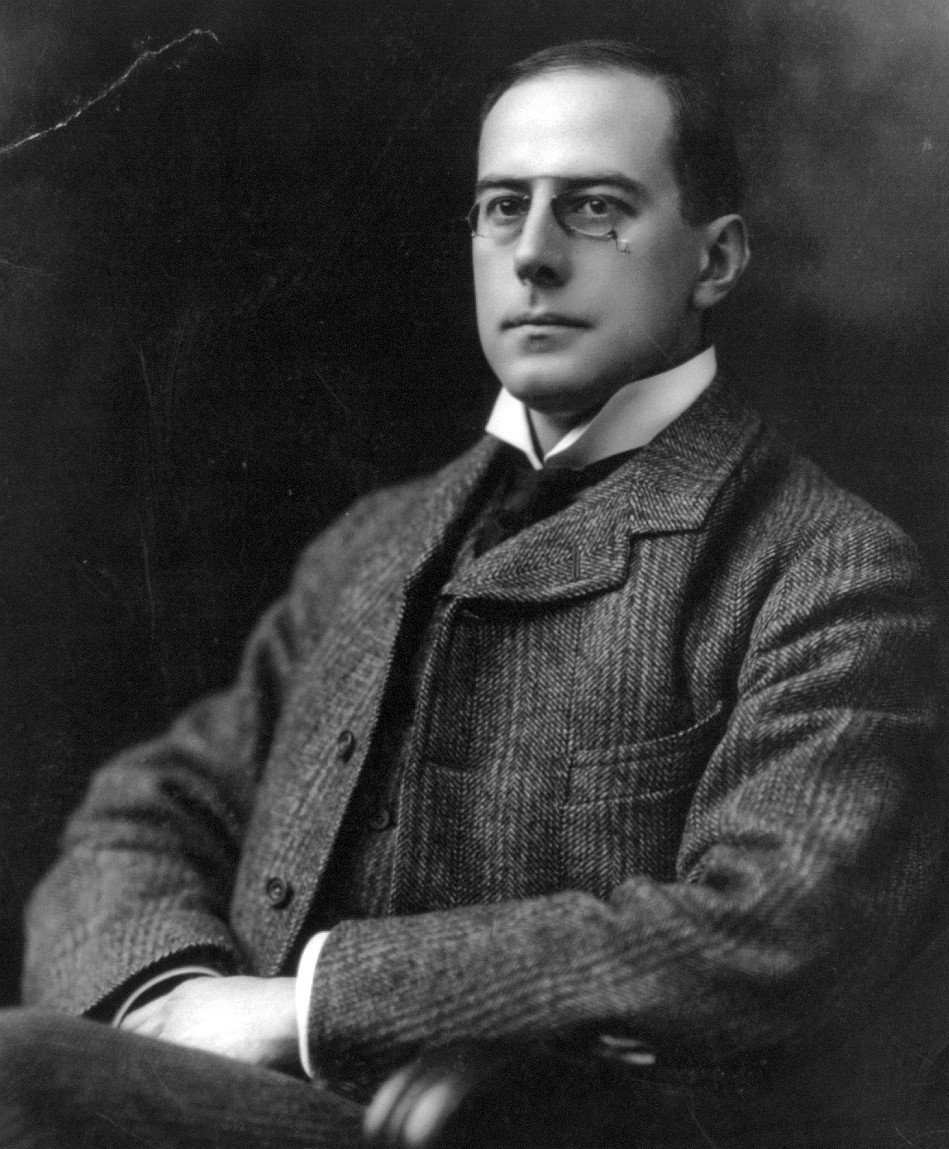
Hugh Chisholm in 1903, photographed by James E. Purdy; Wikimedia Commons, public domain.
Hugh Chisholm in 1903, photographed by James E. Purdy; Wikimedia Commons, public domain. James E. Purdy · Wikimedia Commons · Public domain

02 / People behind the doors

St Mark’s Square’s
people and stories.

A few lives that connect this neighbourhood with a much wider story.

Edwin Hill

No. 1 St Mark’s Square · listed in 1868–69

Hill helped turn postal reform into a practical system. As Controller of Stamps, he supervised stamp manufacture and improved its machinery. He also worked on an envelope-folding machine exhibited at the Great Exhibition of 1851. The elder brother of postal reformer Rowland Hill, he combined invention with writing on currency and social questions. His biography independently records his death at No. 1 in 1876.

Sources and directory references

Selected directory observations: Webster’s 1868, printed page 204 (PDF page 245), column 1: 1 HILL, Edwin/ 18; Webster’s 1869, printed page 202 (PDF page 243), column 3: 1 HILL, Edwin. Page references are PDF pages. These observations do not establish continuous residence.

Hugh Chisholm

No. 11 St Mark’s Square · listed in 1902–03

Chisholm was a journalist and editor best remembered for his work on the Encyclopaedia Britannica. He became editor-in-chief of its eleventh edition, published in 1911, assembling a vast reference work through the contributions of specialists across many subjects. He also worked for The Times. The directory dates coincide with the beginning of his leadership of the encyclopaedia project.

Sources and directory references

Selected directory observations: Webster’s 1902, printed page 269 (PDF page 342), column 1: 11 CHISHOLM, Hugh; Webster’s 1903, printed page 274 (PDF page 343), column 2: 11 CHISHOLM , Hugh. Page references are PDF pages. These observations do not establish continuous residence.

James Sprent Virtue

No. 6 St Mark’s Square · listed in Webster’s and Boyle’s in 1880

Virtue was a publisher specialising in illustrated books and periodicals. He expanded his family’s business in North America before taking over its management in Britain. As proprietor of The Art Journal, he helped circulate reproductions of paintings to readers beyond the galleries themselves. The two guides give complementary forms of his name at No. 6: J. S. Vertue in Webster’s and James Virtue in Boyle’s.

Sources and directory references

Selected directory observations: Webster’s 1880, printed page 226 (PDF page 293), column 4: 6 VERTUE, J. S.; Boyle’s 1880, PDF page 267, column 2: 6 James Virtue. Page references are PDF pages. These observations do not establish continuous residence.

04 / Keep exploring

More history.
Freely discovered.

These collections are a good place to follow your curiosity. Browse their online records free; copies, downloads or permission to reproduce images may carry a charge.

Streets.London is a project by Infrastructure.London.
More ways we care for London’s homes and gardens.

Your details, thoughtfully handled.

Who we are. Streets.London is a project of London Infrastructure Solutions.

Launch updates. With your consent, we use your email address, optional street and postcode interests, the page where you signed up, and any organisation and property-count details you provide to handle group enquiries and send Streets.London launch and record-availability updates. These details are submitted to Brevo to manage our subscriber list. The optional email-update form does not create an account or purchase anything. Free account registration is separate; see our account privacy notice.

Keeping and removing your details. We keep signup information while it is needed for these updates. You can withdraw consent, ask for a copy or correction, or request deletion using the unsubscribe link in our emails, by replying to an update from us or using the London Infrastructure Solutions contact form. We will stop updates when you withdraw consent.

Services we use. Our hosting provider serves this website. Brevo processes signup details and manages our email updates, while Cloudflare Turnstile checks for automated abuse. These providers may process information outside the UK. We do not sell your signup information.

Analytics. If you allow optional analytics, Google Analytics helps us understand page visits and completed signups. We do not send your form email address, street interest or postcode to Google Analytics. Your cookie choice is stored on this device and can be changed using “Cookie choices”.

Your rights. You may ask us to access, correct or delete your information or withdraw consent. You can also raise a concern with the UK Information Commissioner’s Office at ico.org.uk.

Last updated: 15 November 2026.