
01 / Paddington · W2

St Mary’s Terrace
History behind the address.

St Mary’s Terrace belongs to the older residential neighbourhood around Paddington Green, close to the churchyard and the canal basin. This was once a village edge, reshaped as nineteenth-century London expanded around it. The contrast between enclosed streets, mature churchyard trees and nearby transport routes remains an important part of its setting. Older houses and later mansion blocks give the terrace a varied scale rather than the uniform appearance its name might suggest.

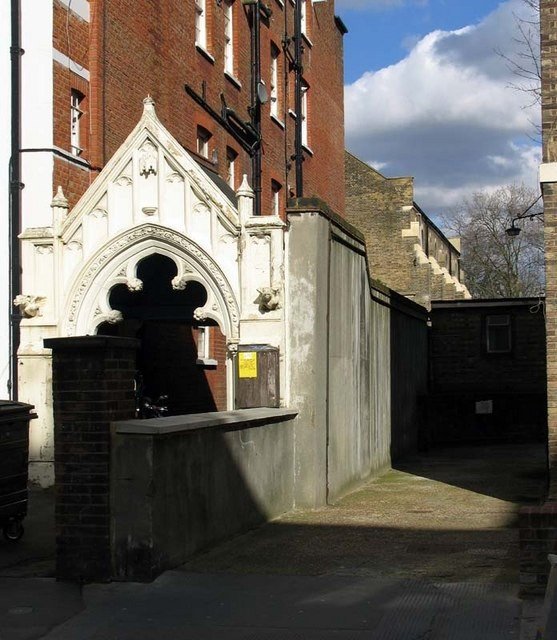
St Mary’s Mansions introduced a denser form of urban living, with numerous separately numbered flats and buildings backing towards the churchyard. Smaller premises survived alongside them, including a vicarage, cottages and studios recorded in the directories. Another distinctive feature is the Gothic entrance to the former St David’s Welsh Church, tucked into the street frontage with the church beyond. These layers of domestic and communal buildings help explain the terrace’s character: a compact residential quarter in which gardens, passages and shared buildings made use of closely confined sites.

History sources
Explore its people and history
The entrance to St David’s Welsh Church in St Mary’s Terrace, Paddington; photograph by John Salmon, Wikimedia Commons, CC BY-SA 2.0.
The entrance to St David’s Welsh Church in St Mary’s Terrace, Paddington; photograph by John Salmon, Wikimedia Commons, CC BY-SA 2.0. John Salmon · Wikimedia Commons · CC BY-SA 2.0

This history is growing. Further directory research and photographs will be added.

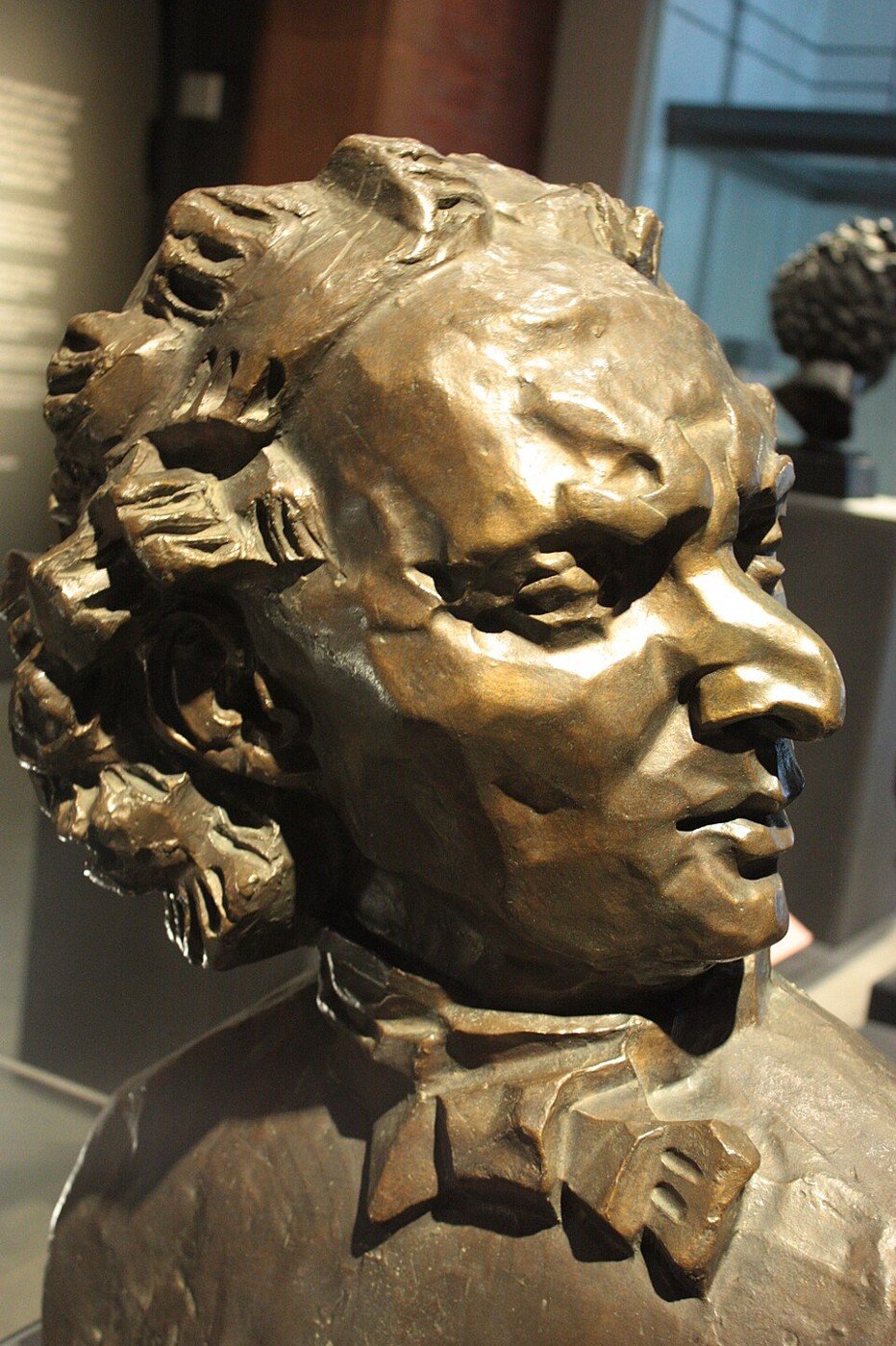
Alfred Wolmark, a portrait bust by Henri Gaudier-Brzeska, 1913; photograph by Stephencdickson, Wikimedia Commons, CC BY-SA 4.0.
Alfred Wolmark, a portrait bust by Henri Gaudier-Brzeska, 1913; photograph by Stephencdickson, Wikimedia Commons, CC BY-SA 4.0. Stephencdickson · Wikimedia Commons · CC BY-SA 4.0

02 / People behind the doors

St Mary’s Terrace’s
people and stories.

A few lives that connect this neighbourhood with a much wider story.

Alfred Wolmark

Claremont Studio, St Mary’s Terrace

Born in Warsaw and brought to London as a child, Wolmark trained at the Royal Academy Schools. His early paintings often explored Jewish life, while his later work developed a much bolder use of colour. He became closely involved with the Ben Uri Art Society, serving as its vice-president for many years.

Sources and directory references

Selected directory observations: Royal Blue Book 1907, PDF page 508, column 3: Alfred Wolmark, artist, Claremont Studio [named premises within the entry].. Page references are PDF pages. These observations do not establish continuous residence.


Alfred Leslie Lilley

No. 1 St Mary’s Terrace, the vicarage

Lilley was an Anglican clergyman and writer associated with religious Modernism, the movement that sought to reconcile Christian belief with contemporary scholarship. His book Modernism appeared in 1908, during the period covered by these Paddington entries. He later became a canon of Hereford Cathedral and archdeacon of Ludlow.

Sources and directory references

Selected directory observations: Royal Blue Book 1907, printed page 467 (PDF page 508), column 3: 1 Lilley, Rev. Alfred L. MA. (The Vicarage). Page references are PDF pages. These observations do not establish continuous residence.
Rollo Appleyard

Flat 79, St Mary’s Mansions, St Mary’s Terrace

Appleyard was an electrical engineer and a historian of electrical communication. His books included Pioneers of Electrical Communication and a history of the Institution of Electrical Engineers covering its first sixty years. He helped preserve the stories of inventors and the development of their profession alongside his technical work.

Sources and directory references

Selected directory observations: Kelly’s Post Office Directory 1915, PDF page 453, column 3: 79 Appleya.rd Rollo [Flat in St Mary’s Mansions.]. Page references are PDF pages. These observations do not establish continuous residence.

04 / Keep exploring

More history.
Freely discovered.

These collections are a good place to follow your curiosity. Browse their online records free; copies, downloads or permission to reproduce images may carry a charge.

Streets.London is a project by Infrastructure.London.
More ways we care for London’s homes and gardens.

Your details, thoughtfully handled.

Who we are. Streets.London is a project of London Infrastructure Solutions.

Launch updates. With your consent, we use your email address, optional street and postcode interests, the page where you signed up, and any organisation and property-count details you provide to handle group enquiries and send Streets.London launch and record-availability updates. These details are submitted to Brevo to manage our subscriber list. The optional email-update form does not create an account or purchase anything. Free account registration is separate; see our account privacy notice.

Keeping and removing your details. We keep signup information while it is needed for these updates. You can withdraw consent, ask for a copy or correction, or request deletion using the unsubscribe link in our emails, by replying to an update from us or using the London Infrastructure Solutions contact form. We will stop updates when you withdraw consent.

Services we use. Our hosting provider serves this website. Brevo processes signup details and manages our email updates, while Cloudflare Turnstile checks for automated abuse. These providers may process information outside the UK. We do not sell your signup information.

Analytics. If you allow optional analytics, Google Analytics helps us understand page visits and completed signups. We do not send your form email address, street interest or postcode to Google Analytics. Your cookie choice is stored on this device and can be changed using “Cookie choices”.

Your rights. You may ask us to access, correct or delete your information or withdraw consent. You can also raise a concern with the UK Information Commissioner’s Office at ico.org.uk.

Last updated: 15 November 2026.