01 / Mayfair · W1J

Berkeley Street
History behind the address.

Berkeley Street runs north from Piccadilly towards Berkeley Square, following one of the early routes into Mayfair. Its origins lie in the grounds of Berkeley House, the great mansion that preceded Devonshire House. Parts of those gardens were opened for building in the late seventeenth century, creating Berkeley Street and neighbouring Stratton Street before much of the farmland farther north became a dense urban district.

The street now has a varied scale, reflecting repeated rebuilding and the conversion of a fashionable residential area into a place of hotels, restaurants and offices. Its southern end meets the broad traffic route of Piccadilly and the approach to Green Park; northwards, the enclosed street gives way to the more open setting of Berkeley Square. This contrast helps explain the address’s appeal: it combined access to the main West End road with proximity to Mayfair’s quieter residential streets and gardens.

History sources
Explore its people and history
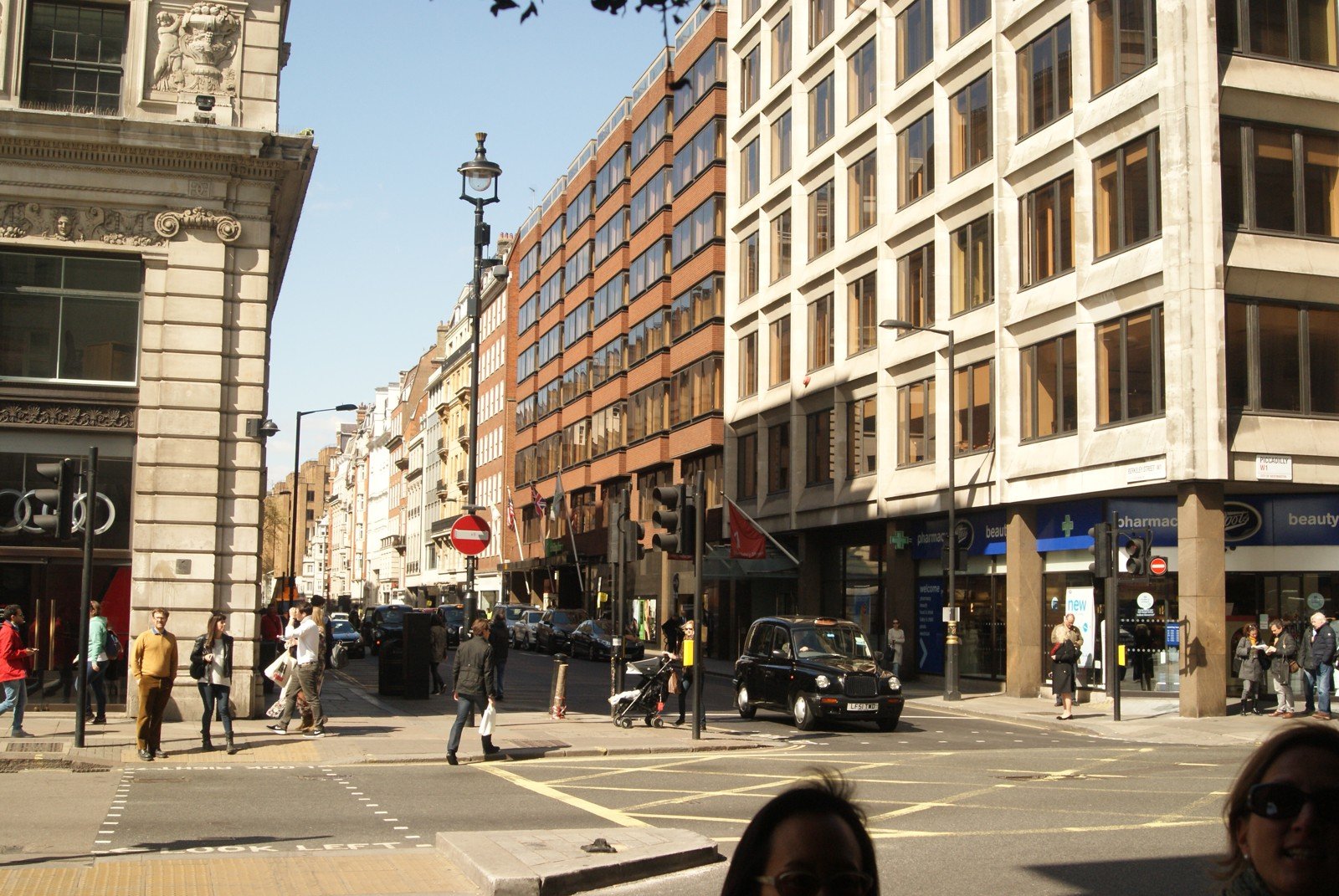
Looking up Berkeley Street from Piccadilly; Wikimedia Commons, CC BY-SA 2.0.
Looking up Berkeley Street from Piccadilly; Wikimedia Commons, CC BY-SA 2.0. Robert Lamb · Wikimedia Commons · CC BY-SA 2.0

This history is growing. Further directory research and photographs will be added.

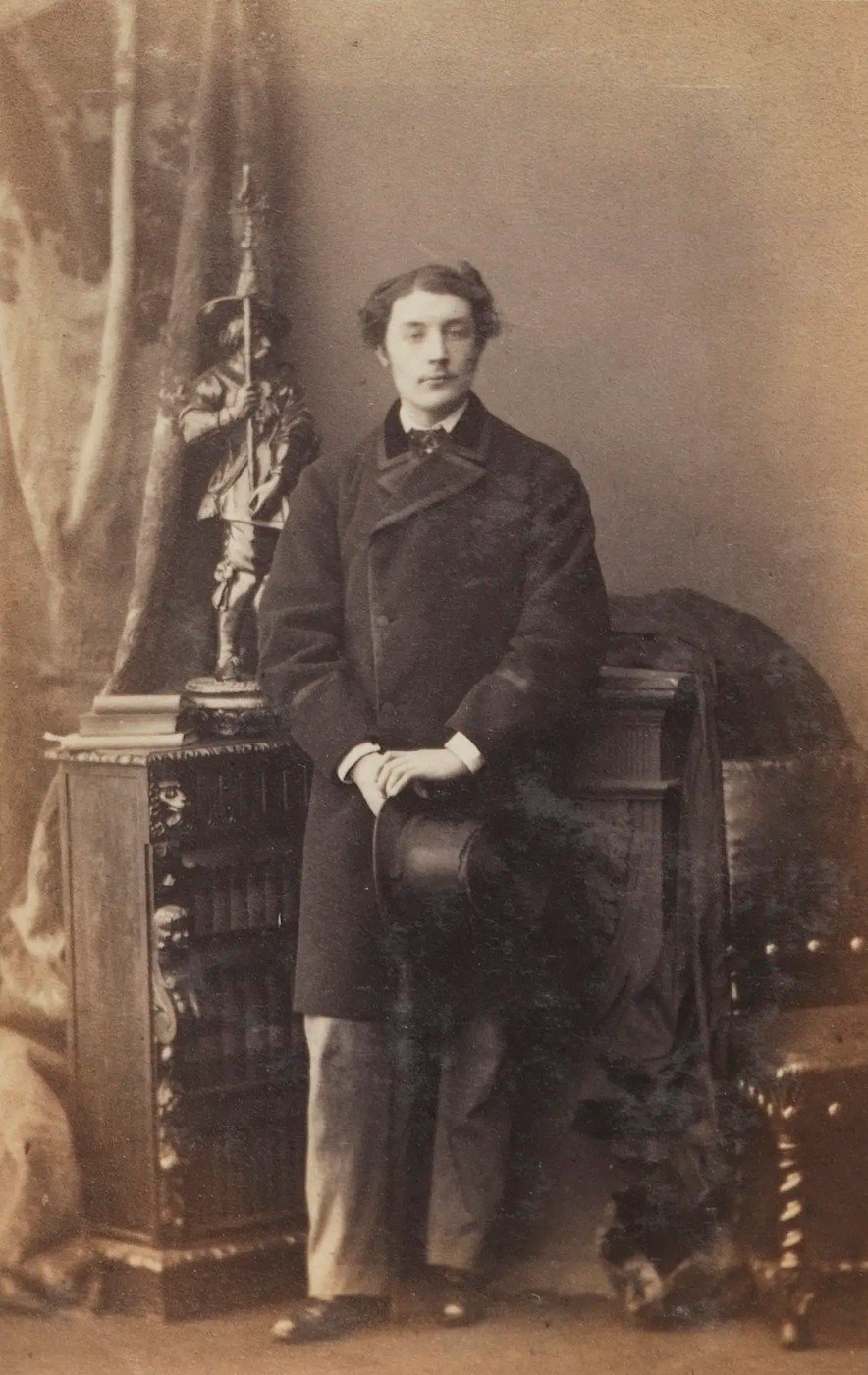
Horace Brand Farquhar in 1860, photographed by Camille Silvy; Wikimedia Commons, public domain.
Horace Brand Farquhar in 1860, photographed by Camille Silvy; Wikimedia Commons, public domain. Camille Silvy · Wikimedia Commons · Public domain

02 / People behind the doors

Berkeley Street’s
people and stories.

A few lives that connect this neighbourhood with a much wider story.

John Barlow

No. 5 Berkeley Street · listed as the Reverend John Barlow in 1847–48

Barlow was a clergyman and secretary of the Royal Institution, where he helped organise public lectures and supported Michael Faraday’s work. He hosted dinners at No. 5 before the Institution’s discourses and encouraged influential patrons to join, including women whose membership widened its social reach. His contribution lay in making scientific lectures and demonstrations a prominent part of London’s cultural life.

Sources and directory references

Selected directory observations: Webster’s 1847, printed page 31 (PDF page 34), column 3: 5 BARLOW, Rev. John; Webster’s 1848, printed page 30 (PDF page 39), column 2: 5 BARLOW, Rev. John. Page references are PDF pages. These observations do not establish continuous residence.

Horace Farquhar, later Earl Farquhar

No. 4 Berkeley Street · listed as Horace Townsend Farquhar in 1882–83

Farquhar was a financier who moved into politics and royal service. He represented Marylebone West in Parliament before entering the House of Lords, and later became Master of the Household to Edward VII and Lord Steward under George V. His business career included banking and colonial companies. The directories record him under the family surname Townsend Farquhar before his later titles.

Sources and directory references

Selected directory observations: Boyle’s 1882, PDF page 58, column 1: 4 Lady Townsend Farquhar Gilbert Townshend Farquhar Horace Townsend Farquhar; Boyle’s 1883, PDF page 55, column 2: 4 Lady TownsendFarquhar Gilbert Townshend Farquhar Horace Townsend Farquhar. Page references are PDF pages. These observations do not establish continuous residence.

Heinrich von Bülow

No. 3 Berkeley Street · listed as Baron Bulow, Prussian ambassador, in 1841

Bülow represented Prussia in London from 1827 to 1841, taking part in the diplomacy surrounding Belgian independence and the Eastern Question. He also promoted the German customs union, the Zollverein. After his London appointment he became Prussian foreign minister in 1842. Boyle’s identifies his diplomatic office as well as his name, placing the ambassador at No. 3 in his final London year.

Sources and directory references

Selected directory observations: Boyle’s 1841, PDF page 43, column 2: 3 Baron Bulow, Prussian Ambas . BaronSchleinitz ,sec. Page references are PDF pages. These observations do not establish continuous residence.

04 / Keep exploring

More history.
Freely discovered.

These collections are a good place to follow your curiosity. Browse their online records free; copies, downloads or permission to reproduce images may carry a charge.

Streets.London is a project by Infrastructure.London.
More ways we care for London’s homes and gardens.

Your details, thoughtfully handled.

Who we are. Streets.London is a project of London Infrastructure Solutions.

Launch updates. With your consent, we use your email address, optional street and postcode interests, the page where you signed up, and any organisation and property-count details you provide to handle group enquiries and send Streets.London launch and record-availability updates. These details are submitted to Brevo to manage our subscriber list. The optional email-update form does not create an account or purchase anything. Free account registration is separate; see our account privacy notice.

Keeping and removing your details. We keep signup information while it is needed for these updates. You can withdraw consent, ask for a copy or correction, or request deletion using the unsubscribe link in our emails, by replying to an update from us or using the London Infrastructure Solutions contact form. We will stop updates when you withdraw consent.

Services we use. Our hosting provider serves this website. Brevo processes signup details and manages our email updates, while Cloudflare Turnstile checks for automated abuse. These providers may process information outside the UK. We do not sell your signup information.

Analytics. If you allow optional analytics, Google Analytics helps us understand page visits and completed signups. We do not send your form email address, street interest or postcode to Google Analytics. Your cookie choice is stored on this device and can be changed using “Cookie choices”.

Your rights. You may ask us to access, correct or delete your information or withdraw consent. You can also raise a concern with the UK Information Commissioner’s Office at ico.org.uk.

Last updated: 15 November 2026.